
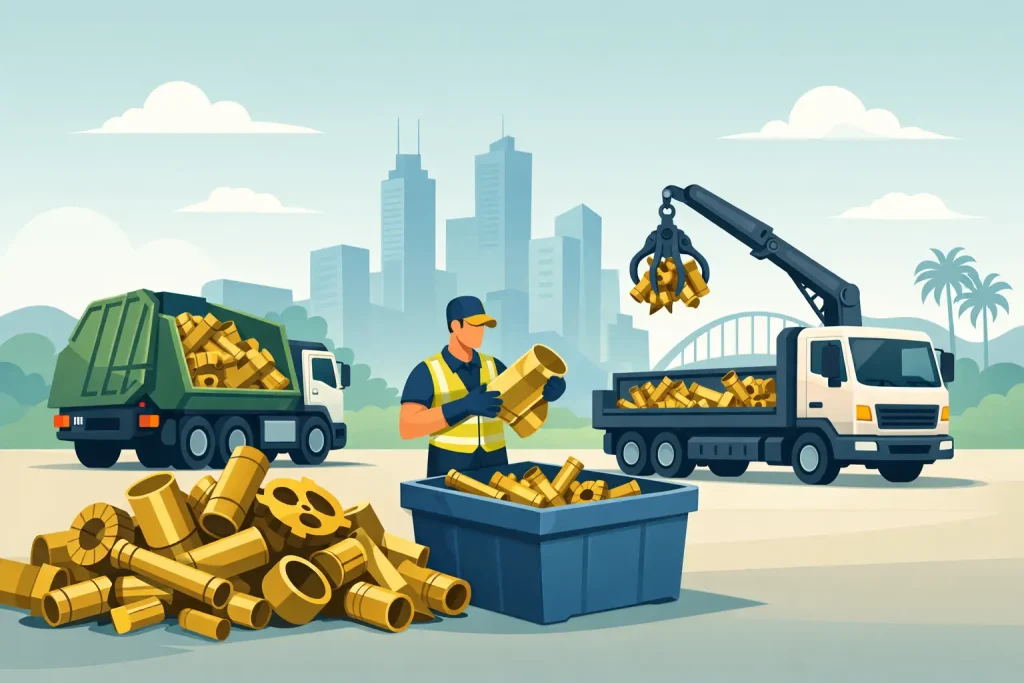
Brass offcuts have a habit of piling up where work happens – under benches, in site bins, behind sheds and in workshop corners. If you need brass scrap collection Melbourne customers can rely on, the job should be simple: quick pickup, fair pricing and no mucking around with transport or disposal.
Brass is too valuable to treat like general rubbish, but plenty of people still lose time trying to figure out what to do with it. Homeowners might only have a small amount from an old plumbing job or renovation. Trades and businesses often have recurring volumes from strip-outs, fit-outs, machining or demolition work. In both cases, the same thing matters: you want the metal gone without disrupting your day, and you want to know it is being handled properly.
Why brass scrap collection in Melbourne matters
Brass turns up in more places than many people realise. Taps, valves, fittings, pipe offcuts, decorative fixtures, locks, hinges and machining components can all contain brass. On busy sites or in active workshops, that material builds up steadily. Leaving it sitting around creates clutter, ties up usable space and can become a safety issue if sharp or heavy pieces are left in walkways or work areas.
There is also the value question. Brass has recoverable value, so sending it to landfill or mixing it with general waste is a missed opportunity. For tradespeople and businesses producing scrap on a regular basis, better recycling habits can turn waste into a useful return. For households, even a smaller load can be worth collecting when the process is easy enough.
Then there is compliance and environmental responsibility. Construction, demolition and trade waste are under more scrutiny than ever. A licensed recycler gives you a cleaner, more accountable way to move scrap into the recycling stream instead of taking chances with unknown buyers or informal disposal.
Who uses brass scrap collection Melbourne services?
The short answer is anyone who ends up with unwanted brass and would rather not waste time hauling it around. In practice, the biggest demand usually comes from plumbers, electricians, builders, demolition crews, maintenance contractors, workshops and small manufacturers. These customers often have mixed loads that include copper and brass together, especially after strip-outs or replacement work.
Homeowners are another common group, particularly after bathroom renovations, kitchen upgrades or old plumbing removals. A few tap sets and fittings might not seem like much at first, but it adds up quickly when combined with other metal scrap. If the service includes collection, the hassle drops away.
For businesses, regular collection can make even more sense. Instead of letting scrap accumulate until it becomes a problem, pickup can be arranged as part of normal operations. That keeps yards, storerooms and work areas cleaner while making disposal more predictable.
What counts as brass scrap?
Brass is an alloy, commonly made from copper and zinc, and it shows up across plumbing, electrical, building and industrial work. Common examples include brass taps, valves, meters, fittings, connectors, nozzles, locks, handles and some decorative metal items.
Not every yellow-coloured metal item is pure brass, and that is where experience matters. Some scrap is mixed with steel, plastic, rubber or other attachments. Some items are plated rather than solid brass. In most real-world jobs, customers do not want to spend time sorting every piece in perfect detail before booking a pickup. A practical recycler can assess what you have, explain what is recyclable and work out the best way to handle mixed loads.
That said, cleaner loads generally make the process faster. If you can keep brass separate from general rubbish and heavily contaminated materials, it helps with accurate quoting and smoother collection. You do not need to overthink it – just avoid throwing brass in with dirt, concrete, food waste or non-metal rubbish if you can help it.
What makes collection better than drop-off?
For many customers, collection is the difference between recycling and putting the job off. Moving brass scrap yourself means loading it, finding time during business hours, using a ute or trailer, and potentially paying staff to leave site. If the quantity is awkward, heavy or spread across different locations, the transport cost can outweigh the convenience.
Collection removes that friction. It is especially useful for trades who would rather stay on the tools, businesses that do not want downtime, and homeowners who do not have the right vehicle. When pickup is arranged properly, the metal is removed from site quickly and with less disruption.
There is also the safety factor. Brass scrap often comes mixed with sharp fittings, broken hardware or heavy pieces from demolition and strip-outs. Having an experienced team collect it reduces handling and lowers the chance of someone cutting corners just to get it out of the way.
How the process usually works
A good brass scrap collection service should feel straightforward from the first call. You explain what material you have, roughly how much there is and where it is located. From there, collection can be scheduled based on access, volume and the type of scrap on site.
For smaller household loads, the focus is usually convenience. For trade and commercial customers, it is more about speed, repeat service and keeping the site moving. In either case, clear communication matters. Customers want to know when someone is coming, what needs to be ready and whether the load includes anything that should be separated.
Pricing depends on the brass grade, how clean the material is, current market conditions and whether the load includes mixed metals. Anyone promising a fixed figure without asking basic questions is usually oversimplifying the job. Fair pricing is important, but so is honesty about what affects value.
What to look for in a recycler
When comparing options for brass scrap collection in Melbourne, trust matters as much as price. A licensed and insured operator gives customers more confidence that the material is being handled properly. That is particularly important for commercial sites, demolition work and recurring collections where accountability counts.
Service coverage matters too. Melbourne jobs are rarely neat and central. Some customers are in suburban homes, others are in industrial estates, workshops or active construction areas. A recycler offering broad local coverage and reliable pickup times is usually more useful than one with a slightly better headline rate but poor follow-through.
It also helps to work with a recycler that understands mixed-metal jobs. Brass often comes alongside copper, cable, fittings and other recoverable materials. Being able to assess the whole load properly saves time and usually leads to a better overall result than dealing with everything separately.
Melbourne Copper Recycler focuses on that practical side of the job – fast collection, fair quotes and straightforward service that works for homes, trades and businesses.
Getting the best result from your brass scrap
You do not need to spend hours processing scrap before collection, but a few simple steps can help. Keep brass separate from general rubbish where possible. If you have obvious non-metal attachments that are easy to remove, doing so may improve the quality of the load. Store the material somewhere accessible so collection does not turn into a half-day site hunt.
For trade customers, setting up one dedicated area or bin for brass and copper scrap can make ongoing collections much easier. It keeps valuable metal out of skip bins and makes volumes easier to track. Over time, that can improve both site cleanliness and returns.
If you are unsure whether something is brass, do not guess and throw it away. Ask. A quick check can stop recyclable material from being lost in mixed waste.
A practical option for homes, trades and business
The best brass scrap service is not the one with the fanciest pitch. It is the one that turns up, pays fairly and makes the whole process easier than hanging onto the scrap for another month. Whether you have a few old fittings after a renovation or regular volumes from commercial work, collection should save you time, free up space and move recyclable metal back into use.
If your brass scrap is starting to get in the way, that is usually the sign to get it collected rather than let it sit. A quick call and a clear pickup plan can sort it out before it becomes one more job on the list.