
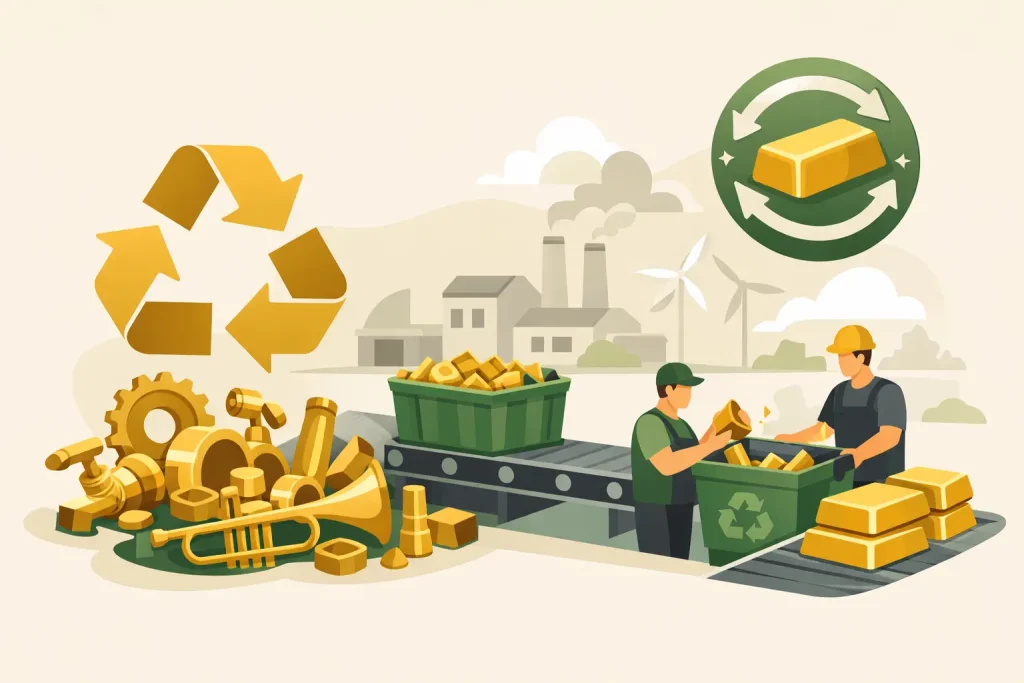
A box of old taps in the shed, offcuts from a plumbing job, worn fittings from a demolition strip-out – brass builds up faster than most people expect. If you’ve been wondering can brass be recycled, the short answer is yes, and it’s well worth doing when you want to clear space, recover value and keep useful metal out of landfill.
Brass is a non-ferrous metal, which means it does not contain iron and can be recycled repeatedly without losing its core properties. That makes it a practical material for reuse across manufacturing, construction and metal production. For homeowners, trades and businesses around Melbourne, brass recycling is less about theory and more about getting rid of scrap properly, with fair pricing and no mucking around.
Can brass be recycled more than once?
Yes. Brass can be recycled again and again. Once collected, it is sorted, cleaned where needed, processed and sent back into the recycling stream to be melted down and used in new products.
That matters because brass is used in a wide range of everyday and trade materials, including taps, valves, plumbing fittings, locks, door hardware, cartridge cases, electrical parts and decorative fixtures. Throwing those items in the rubbish wastes recoverable metal that still holds value.
Unlike some mixed materials that are harder to process, brass remains a strong candidate for recycling because its metal content can be recovered efficiently when it is separated properly. The better the sorting, the easier the recycling process tends to be.
What brass scrap can usually be recycled?
Most common brass items can be recycled, provided they are genuinely brass and not heavily contaminated. In practical terms, that includes plumbing fittings, old tapware, brass valves, pipe offcuts, meters, hinges, locks, screws, clips and workshop scrap.
Some loads are straightforward. Clean brass offcuts from a worksite are usually simple to identify and process. Other loads need a closer look. Mixed demolition material, for example, may include brass attached to steel, plastic, rubber or ceramic parts. Those items may still be recyclable, but the amount of sorting involved can affect the final value.
If you are unsure whether something is brass, that is common. Brass is often mistaken for bronze or coated metals because the appearance can be similar, especially when the surface is worn, painted or tarnished.
How to tell if something is brass
Brass usually has a yellow-gold appearance, though old pieces may look dull brown or dirty. It is commonly made from copper and zinc, which gives it good corrosion resistance and makes it popular in plumbing and hardware applications.
A simple magnet test can help. Brass is generally non-magnetic, so if a strong magnet sticks firmly, the item may be steel or another ferrous metal with a brass-coloured finish. Weight can also be a clue. Brass often feels heavier than it looks.
That said, appearances are not always enough. Some items are plated, and some are mixed-metal assemblies. If you have a bucket of fittings or site scrap and do not want to spend time sorting every piece yourself, a recycler can usually assess the material and advise what is recyclable and what may need separating.
Why brass recycling is worth it
For most customers, the main reasons are simple: brass has scrap value, recycling reduces waste, and proper collection saves time.
Brass is not a throwaway material. Even smaller amounts can add up over time, especially for plumbers, sparkies, builders, maintenance teams and workshops that generate recurring scrap. Holding onto it in bins, trailers or storage cages just ties up space.
There is also the environmental side. Recycling brass reduces the need to extract and process new raw materials, which cuts down energy use and supports a more efficient materials cycle. For businesses that care about responsible disposal, or need to show they handle scrap properly, that matters.
Then there is the practical benefit. If brass scrap is collected along with copper and other non-ferrous metals, it can be moved off site quickly without interrupting the workday. That is often the difference between recycling happening and scrap sitting around for months.
What affects the value of brass scrap?
Not all brass loads are priced the same. The value depends on the grade, cleanliness, quantity and how much non-metal material is attached.
Clean brass usually attracts stronger pricing than mixed or dirty brass. A pile of separated brass fittings without plastic, rubber, screws or steel contamination is easier to process than a mixed bucket of dismantled hardware. Quantity matters too. Larger, consistent loads are generally more efficient to handle than tiny amounts spread across multiple material types.
Market conditions also play a role. Scrap metal prices move, so the rate for brass can change with broader demand and commodity markets. That is why quotes can vary from one time to another.
For customers, the useful takeaway is simple: if you can keep brass separate from rubbish and other metals, you usually give yourself the best chance of a cleaner transaction and a better return.
Can brass go in kerbside recycling?
In most cases, no. Brass should not be placed in standard household recycling bins. Kerbside systems are designed for packaging materials such as paper, cardboard, glass and certain plastics and cans, not heavy scrap fittings, taps or trade metal.
Small brass items tossed into kerbside recycling can cause sorting issues and may not be recovered properly. If you have brass scrap from home projects, renovations, plumbing work or clean-ups, the better option is to take it to a scrap recycler or arrange collection if the volume justifies it.
That approach is safer, more accurate and far more likely to recover actual value from the material.
Brass recycling for homes, trades and worksites
The way brass shows up depends on who is holding it. Homeowners might have old tapware, door handles, fixtures or shed leftovers from a renovation. Tradespeople often deal with regular brass offcuts, valves, connectors and stripped components from service work. Builders and demolition crews may end up with larger mixed loads that include brass among copper, stainless and other scrap metals.
Each of those situations needs a practical solution, not a complicated one. If the material is already separated, the process is faster. If it is mixed, it can still often be handled, though sorting may influence the final outcome.
This is where local service matters. A Melbourne-based recycler that offers quick collection, straightforward quotes and licensed handling makes brass recycling far easier than trying to load everything into a ute and lose half a day delivering it yourself.
Preparing brass for recycling
You do not need to overthink it, but a little preparation helps. If possible, keep brass separate from steel, aluminium and general rubbish. Remove obvious non-metal attachments such as plastic casings or rubber hoses if they come off easily. Do not waste time stripping items down if it becomes labour-heavy, especially on a busy site. There is a point where your time is worth more than the extra clean-up.
It also helps to store brass somewhere dry and accessible until collection. A labelled tub, crate or bin makes life easier for both you and the recycler.
For larger commercial loads, consistency is useful. If your team regularly separates brass from other metals, pickups tend to be quicker and pricing discussions are usually more straightforward.
When recycling brass is not completely straightforward
There are a few cases where the answer to can brass be recycled becomes more of an it depends. Brass that is heavily contaminated with other materials may still be recyclable, but it might be classed differently or require extra processing. Items that only contain a small amount of brass may not carry the same value as solid brass scrap.
The same goes for sealed assemblies, plated items or units containing hazardous residue. They are not always unsuitable, but they may need inspection before being accepted in the normal scrap stream.
That is why clear advice matters. A reliable recycler should tell you what you have, what can be recovered and what level of preparation makes sense, without turning a simple job into a drama.
For customers across Melbourne, the best brass recycling setup is usually the simplest one: separate what you can, get a quote, book collection and move the scrap on without slowing down the rest of the day. Melbourne Copper Recycler works with households, tradies and businesses that want exactly that – practical service, fair value and responsible recycling that keeps useful metal in circulation.
If you have brass sitting in a shed, workshop, factory or on site, it is probably worth more in the recycling stream than gathering dust where it is.