
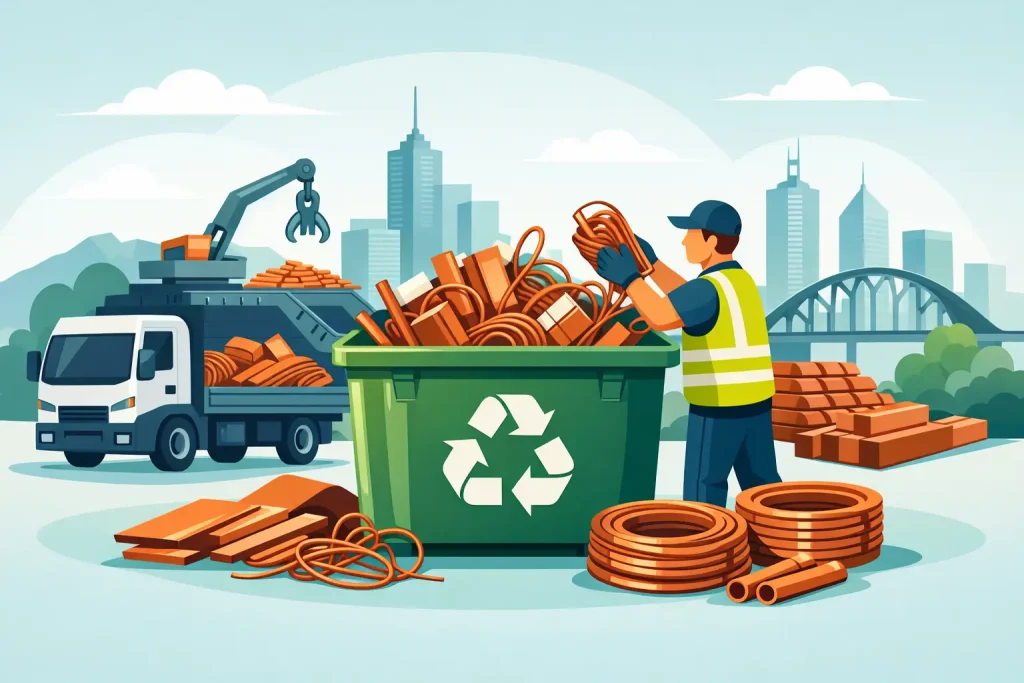
Copper offcuts have a habit of piling up where work gets done – in the shed, behind the workshop, beside the switchboard fit-off, or in a bin at the back of the site. A reliable copper offcuts recycling service gives that scrap a clear path out, without wasting your time or leaving money sitting in a corner.
For Melbourne households, tradies and businesses, the main issue usually is not whether copper can be recycled. It is how to move it on quickly, get a fair return, and know it is being handled properly. That is where a local collection service makes the difference.
Why a copper offcuts recycling service matters
Copper is too valuable to send to landfill and too useful to ignore when it starts building up. Even small offcuts from wiring, pipe, roofing, fabrication or demolition work can add up faster than most people expect. What looks like a messy pile of leftovers can become recoverable value with the right recycler.
The bigger benefit is convenience. If you are running jobs across Melbourne, the last thing you need is a special trip to move scrap. If you are a homeowner cleaning out a garage or finishing renovations, you probably do not want to sort through metal and work out where it goes. A service-based recycler removes that friction by collecting the material and keeping the process straightforward.
There is also the compliance side. Commercial sites, workshops and demolition operators need to know their scrap is going to a licensed operator. Responsible recycling protects your business, supports better resource recovery and keeps usable metal in circulation.
What counts as copper offcuts
Copper offcuts are the leftover pieces generated during installation, repair, demolition or manufacturing. In practice, that can include stripped cable, electrical wire, pipe lengths, plumbing cut-offs, sheet pieces, tubing, busbar sections and fabrication remnants. Some loads are clean and separated. Others are mixed with fittings, insulation or general site scrap.
That mix matters because condition affects value. Clean, bright copper usually attracts a better rate than material with solder, paint, heavy corrosion or attached non-metal parts. Still, lower-grade copper scrap is often worth recycling, especially when collection is included and you are saving time on disposal.
If your load includes brass as well, that is usually not a problem. Many jobs produce both materials, particularly in plumbing, mechanical work and strip-outs. A recycler that handles both can save you from splitting the job across different buyers.
Who uses this service most
A copper offcuts recycling service is useful for more than large commercial operators. In Melbourne, it suits a wide mix of customers because copper waste shows up in a lot of places.
Electricians often build up cable offcuts and stripped wire across several jobs before it becomes worth moving. Plumbers deal with copper pipe, fittings and renovation scrap. Builders and demolition crews generate mixed metal during strip-outs, refits and site clearances. Workshops may have recurring offcuts from fabrication or repair work. Homeowners tend to call after renovations, shed clean-ups or when old materials have been sitting around for years.
The common thread is simple. No one wants scrap taking up space, and most people would rather have it collected than spend part of the day loading it into a ute and driving it across town.
The real advantage is collection
Price matters, but service is what usually makes recycling happen. If disposal is awkward, scrap gets left where it is. That is why collection is often the deciding factor for trades and businesses with tight schedules.
A good local recycler will make the process easy. You call, explain what you have, get a quick quote or rate guidance, and book a pickup time that fits the day. That approach works whether you have a one-off load from a house clean-out or regular scrap from ongoing work.
Free collection can change the numbers as well. A slightly better posted rate somewhere else may not actually be better once fuel, labour, travel time and site disruption are taken into account. For a busy tradie or small business, time on the road is usually more expensive than it looks.
What to expect from a copper offcuts recycling service
The best services are not complicated. They are fast to deal with, clear on pricing and easy to book. You should expect direct communication, practical pickup arrangements and no run-around.
Most collections start with a quick description of the material. You may be asked what type of copper you have, how much there is, whether it is clean or mixed, and where it is located. That helps the recycler plan the collection and give you a realistic idea of value.
From there, the focus should be on getting the scrap off your hands with minimal hassle. For repeat customers, that can mean regular pickups. For one-off jobs, it might simply mean a prompt collection that keeps your site tidy and your work moving.
Getting the best value from your scrap
You do not need to overthink copper recycling, but a bit of preparation can help. If it is practical, keep copper separate from general rubbish and mixed metal. Cleanly sorted scrap is easier to assess and usually easier to price. If cable has already been stripped, that can improve value, although it depends on the volume and whether the labour is worth it for you.
That said, perfection is not required. Plenty of customers have mixed loads, older scrap or material with fittings attached. The point of using a service is to avoid turning scrap disposal into another job on your list. A decent recycler will tell you what is worth separating and what can simply be collected as is.
For commercial operators, consistency helps. Setting aside a dedicated area or bin for copper offcuts can stop valuable scrap being lost in skip bins or mixed waste. Over time, that small habit can turn into a steady return.
Copper recycling and environmental responsibility
There is a practical business reason to recycle copper, but there is also a bigger one. Copper can be recycled and reused without losing its core properties, which makes it one of the more useful materials to keep in the recovery stream. Every load that gets recycled reduces the need for more raw extraction and keeps metal out of landfill.
For Melbourne businesses, this matters more than ever. Clients, builders and project managers are paying closer attention to waste handling and responsible disposal. Even when formal reporting is not required, working with a licensed and insured recycler shows that scrap is being managed properly.
For households, the environmental benefit is simpler but still worthwhile. Instead of sending usable material to waste, you are putting it back into circulation. That is the kind of practical sustainability that makes sense because it is easy to do and delivers a clear result.
Choosing the right recycler in Melbourne
Not every buyer offers the same experience. Some are set up for drop-off only, which can work if you have transport, time and a decent volume. Others are service-driven and built around collection, quick response and straightforward customer support. For many customers, that second option is the better fit.
Look for a recycler that covers your area, communicates clearly and handles jobs without fuss. Licensed and insured operations matter, especially for commercial work. So does local knowledge. A Melbourne-based operator understands traffic, site access, timing pressures and the way local trades actually work.
It also helps to choose a recycler that gives fair, competitive pricing without making the process hard. The best service is not always the one with the loudest claim. It is the one that turns up, pays fairly and makes your scrap easy to move.
Melbourne Copper Recycler is built around that practical approach – quick collection, competitive prices and responsible recycling without unnecessary delays.
When it makes sense to book a pickup
The short answer is earlier than most people do. Waiting until copper offcuts are overflowing from a corner of the site usually means wasted space and avoidable clutter. Booking collection as soon as the volume is noticeable keeps work areas cleaner and reduces the chance of good scrap being mixed into general waste.
For ongoing trade and workshop work, regular pickups can be the smarter option. For households and one-off projects, a single collection is often enough to clear everything in one go. It depends on volume, access and how often you generate scrap, but the principle stays the same: if copper is sitting there doing nothing, it is time to move it on.
A dependable copper offcuts recycling service should make that easy. If your scrap is ready to go, the next step is simple – book the collection, clear the space and turn leftover copper into value instead of letting it gather dust.