
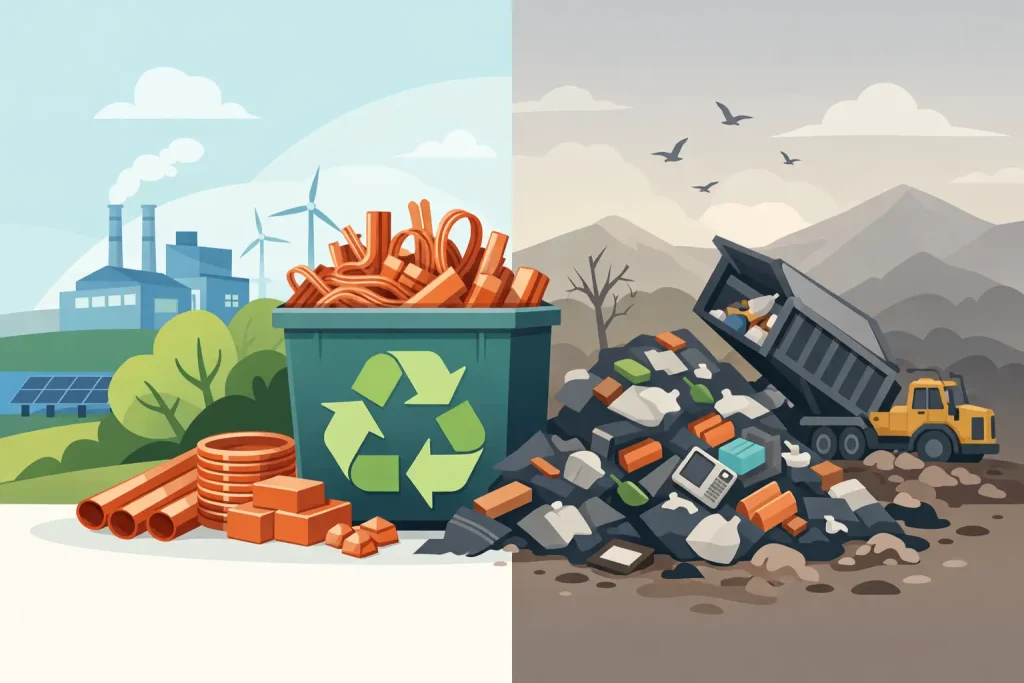
A pile of stripped cable, offcuts from a fit-out, old pipe from a bathroom reno – it all takes up space fast. When you compare copper recycling versus landfill disposal, the difference usually comes down to two things Melbourne customers care about most: value and practicality. One option turns scrap into money and keeps useful metal in circulation. The other usually costs you time, tipping fees and a missed opportunity.
For homeowners, tradies and business operators, this is not an abstract environmental debate. It is a day-to-day decision about what to do with material that is bulky, heavy and too valuable to ignore. If copper is ending up in a skip bin or heading to landfill, there is a good chance you are paying to throw away something that still has real market value.
Why copper recycling versus landfill disposal matters
Copper is not like mixed rubbish. It is a recoverable metal with ongoing demand because it is used in wiring, plumbing, manufacturing, air conditioning systems and all sorts of infrastructure. Even when it comes off a job site as scrap, it still has worth.
That changes the equation. With general waste, landfill may seem like the quickest path. With copper, landfill disposal often means higher overall cost, especially once you factor in handling, transport and disposal charges. Recycling, on the other hand, can reduce clutter, clear a site faster and return cash for the material.
There is also the compliance side. For many commercial operators, proper disposal is not just about convenience. It is part of keeping sites safe, managing waste streams correctly and avoiding sloppy practices that can create problems later. Copper left lying around becomes a trip hazard, a storage issue and sometimes a theft risk. Moving it on through a licensed recycler is usually the cleaner option.
What happens when copper goes to landfill
Landfill disposal sounds simple until you work through the details. Someone has to collect the material, load it, transport it and pay to drop it off. If the copper is mixed with other waste, there may be extra labour in separating it or extra charges because of weight.
For a homeowner with a small amount of old copper pipe, the hassle may be enough to make landfill feel tempting. For a sparky, plumber, builder or workshop manager generating scrap every week, it becomes an expensive habit. You are effectively treating a saleable material as rubbish.
There is also the resource side of the issue. Copper does not disappear because it has been buried. It remains a usable metal that could have been processed and returned to manufacturing. Sending it to landfill means more demand for newly mined copper, more energy use across the supply chain and more pressure on finite resources.
That does not mean every load is neat and easy to recycle. Some scrap is dirty, mixed, insulated or attached to other materials. But difficult is not the same as worthless. In many cases, it still makes more sense to have it assessed for recycling than to dump it by default.
Why recycling copper usually makes more sense
The main reason is straightforward: copper holds value. Whether it is clean bright wire, old plumbing pipe, roofing offcuts, motor windings or mixed copper scrap, there is often a return available where landfill offers only a cost.
The second reason is efficiency. A good recycler removes friction from the job. Instead of organising a separate trip, queueing at a transfer station or having scrap build up in the yard, you can move it out quickly and keep the site clear. That matters when your day is already full and disposal is just one more task competing for time.
The third reason is environmental responsibility without extra drama. Many customers want to do the right thing, but they do not want a complicated process. Recycling copper gives you a practical way to reduce waste and recover material without turning disposal into a project of its own.
Copper recycling versus landfill disposal for different customers
For households, the decision often comes up during clean-ups and renovations. Old hot water services, removed piping, electrical leftovers and bits of metal from the shed can sit around for months because nobody is quite sure what to do with them. Landfill feels familiar, but it usually means loading the car, making the trip and paying to get rid of something that may still be worth money.
For tradies, the trade-off is sharper. Copper offcuts and stripped cable are common by-products of paid work. If that scrap goes into the bin, the job loses part of its residual value. Over time, the difference adds up. What looks minor across one bathroom, one switchboard or one small demolition can become a meaningful loss over a month or a quarter.
For commercial sites, there is also workflow to consider. Accumulated scrap can clog storerooms, yards and plant areas. It can create confusion about what is waste and what should be recovered. Recycling is often the more controlled option because it supports cleaner operations and a clearer chain of handling.
The trade-offs are real, but they are manageable
There are cases where landfill disposal happens because the copper is heavily contaminated, mixed into broader demolition waste or simply not separated on site. In those situations, recycling may take a bit more effort upfront. Someone has to sort material, keep valuable scrap aside and arrange collection.
But that extra effort is usually modest compared with the upside. Even basic separation can improve returns and reduce the amount of waste going into a skip. If you are already paying staff to clean up a site, setting copper aside is often one of the easiest wins available.
Another trade-off is timing. Some customers hold onto copper hoping prices will rise. Others want it gone immediately to free up space. There is no universal answer here. If storage is secure and volume is building, waiting can make sense. If the scrap is getting in the way, collection now is usually the better operational call. The point is that recycling gives you options. Landfill does not.
What to do with copper scrap instead of binning it
The most practical approach is simple. Keep copper separate from general rubbish as early as possible. Do not let it disappear into mixed site waste if it can be avoided. Pipes, wire, fittings and offcuts are easier to manage when they are collected in one spot.
If the material is clean, that generally helps. If it is mixed or has attachments, do not assume it is not recyclable. A recycler can tell you what it is worth and what grade it falls into. That is far better than guessing and paying to dump it.
For many Melbourne customers, collection is the real turning point. Once transport is taken off the table, recycling becomes the easier option rather than the harder one. That is why service matters just as much as price. Fast pickup, straightforward communication and fair payouts make the whole process more useful.
Melbourne Copper Recycler works with exactly this sort of material flow – helping households, trades and businesses move scrap copper out quickly, recover value and avoid unnecessary landfill.
Choosing the better option in Melbourne
If you are deciding between copper recycling versus landfill disposal, ask a few practical questions. Is the material still valuable? Will landfill cost money to use? Is transport a hassle? Is the scrap taking up room you need back? In most cases, those answers push in the same direction.
Recycling is usually the better fit when you want quick removal, fair value and a cleaner result for the site. Landfill tends to make sense only when material has been badly mixed, poorly handled or left too late to separate properly. Even then, it is worth checking first before writing the load off.
The bigger point is this: copper should rarely be treated like ordinary rubbish. It is a reusable resource, and for many customers it is also an easy source of recovered value. If you have copper scrap sitting in the garage, workshop, yard or on site, the smartest next step is usually not to bury it. It is to move it into the recycling stream and get something back for it.