
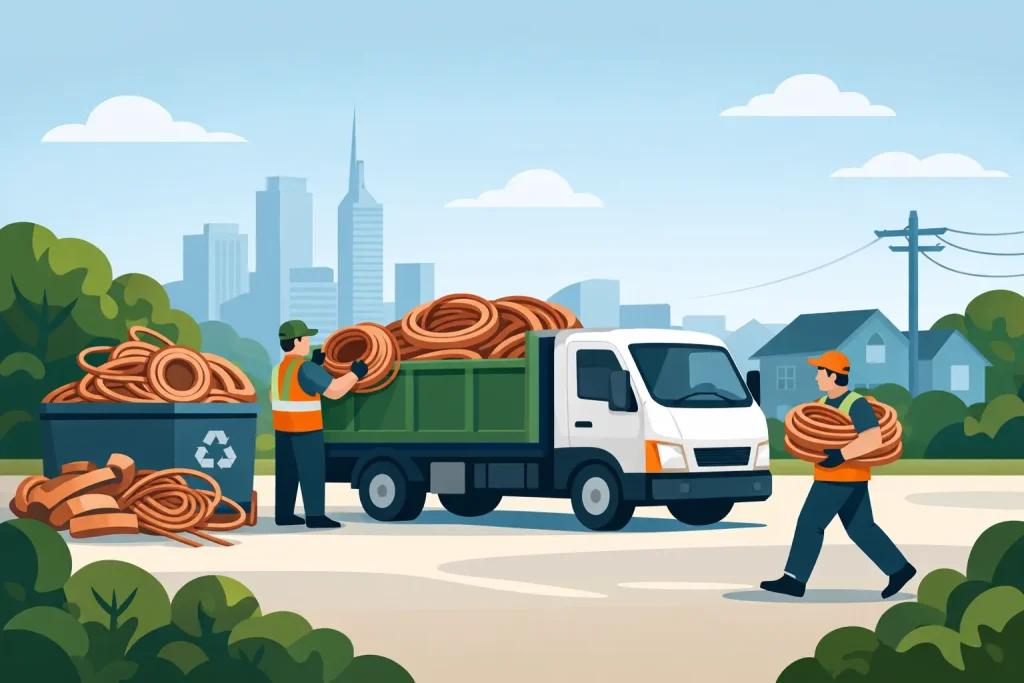
A pile of stripped cable in the shed, offcuts in the back of the ute, old wiring from a renovation sitting in the workshop – it all takes up space, and it all has value. That is why copper wire recycling collection matters. Instead of letting scrap build up or wasting time hauling it across town, you can have it collected quickly and turned into a proper return.
For Melbourne homeowners, sparkies, plumbers, builders, demo crews and small businesses, the main issue is rarely whether copper is recyclable. It is how to move it on without losing half a day in the process. A reliable collection service solves that. It keeps your site cleaner, helps you recover value from scrap, and makes sure the material goes into the recycling stream the right way.
Why copper wire recycling collection makes sense
Copper wire is one of the more valuable scrap materials found on residential, commercial and industrial jobs. Even smaller amounts can add up over time, especially for trades who generate recurring offcuts, redundant cable, and removed wiring during fit-outs or upgrades.
The challenge is convenience. If you have to sort transport, load the vehicle, queue at a yard and work out what is accepted, recycling becomes one more job on an already full day. Copper wire recycling collection removes that friction. The material is collected from your site, home or workplace, and you can get on with what you actually need to do.
There is also the issue of compliance and trust. Not every customer wants to deal with uncertain buyers or informal arrangements. A licensed and insured recycler gives you a clearer process, fairer dealing and peace of mind that your scrap is being handled responsibly.
Who usually needs copper wire recycling collection?
This service is useful for more people than most think. Homeowners often have old household wiring left over from renovations, appliance removals or shed clean-outs. It might not be enough to justify a special trip, but it is still worth recycling.
For trades, collection is often the more practical option. Electricians regularly generate cable offcuts, stripped wire and removed wiring. Plumbers, builders and demolition operators also come across mixed metal loads that include recoverable copper. Workshops and factories can end up with recurring volumes from maintenance, upgrades and surplus stock.
The right service works for both one-off collections and repeat jobs. That matters because not every customer has the same volume. A homeowner with a small amount wants an easy process. A commercial operator with ongoing scrap wants consistency, speed and a fair rate over time.
What affects the value of copper wire?
Not all copper wire is priced the same, and that is where experience helps. Clean, stripped copper usually attracts a stronger rate than insulated wire because it is easier to process. Thicker gauge material, cleaner loads and well-separated scrap can also improve value.
That said, it depends on what you have and how it is presented. Some customers have time to sort and strip material. Others do not, and for many businesses that is the right call. If your labour costs more than the gain from extra prep, it makes more sense to leave the material as is and arrange collection.
Market conditions matter too. Scrap prices can move, sometimes quickly. A good recycler will be upfront about current pricing and explain what affects the quote, rather than making vague promises that change when the truck arrives.
Copper wire recycling collection for homes and renovations
If you are clearing out after a renovation or pulling apart an old setup, copper scrap tends to appear in awkward amounts. Too much to throw in with general rubbish, not enough to feel like a major project. That is exactly where collection is useful.
You do not need to become a scrap expert to do the right thing. Set the material aside in a safe, accessible spot and arrange collection. If you also have brass fittings or related metal from the same job, that may be recyclable as well, which can make the collection even more worthwhile.
For households, the biggest benefit is usually simplicity. No trailer hire, no mess in the car, no guessing where the material should go. Just a straightforward service that gets it removed properly.
Why trades and businesses rely on collection
For trade operators, scrap metal can be both a nuisance and an opportunity. Leave it lying around and it clutters the site, creates storage headaches and can even become a safety issue. Move it on regularly and it becomes part of a cleaner, more efficient workflow.
That is why copper wire recycling collection is not just about disposal. It is part of running a tighter job. Regular collection helps keep yards, workshops and vans under control, while returning value from materials that would otherwise sit idle.
It also reduces downtime. If your team is spending time carting scrap instead of getting to the next call-out or finishing the current job, the hidden cost can be higher than expected. A collection service keeps your crew focused on paid work.
What to expect from a good collection service
A good service should be easy to book and clear from the first call. You want to know whether the recycler covers your area, what materials are accepted, how pricing works and when collection can happen. If those basics are hard to pin down, that usually tells you enough.
Speed matters, but so does reliability. Fast collection is only useful if the service actually turns up when promised. For many customers, especially trades and commercial sites, timing is just as important as price.
You should also expect straightforward communication. If your load includes mixed metals, insulated wire, brass or other scrap, the recycler should explain how that will be handled. Clarity builds trust, and trust is a big part of choosing who collects from your property or worksite.
Preparing for copper wire recycling collection
You do not need to overcomplicate the process, but a bit of preparation can help. Keeping copper separate from general rubbish and obvious contaminants makes collection smoother. If you have different metals, it can be worth separating them where practical, especially if you want a clearer idea of value.
Accessibility also matters. If the material is stacked behind equipment, under other waste or spread across multiple areas, collection can take longer. Where possible, bring it together into one easy-to-reach spot.
Safety should come first. Scrap should be dry where possible, free from hazardous attachments, and stored so it can be handled without unnecessary risk. If you are unsure about a particular material, ask before collection day rather than guessing.
Environmental value that goes beyond the payout
The money matters, but it is not the whole picture. Copper is a highly recyclable material, and recovering it properly reduces the need for new raw extraction. That means less waste heading to landfill and better use of valuable resources already in circulation.
For businesses, that also supports a more responsible way of operating. Clients, builders and project managers are paying closer attention to how waste is managed. Recycling copper and related metals through a legitimate local operator is a practical step that supports cleaner job sites and better environmental outcomes.
This is one reason many Melbourne customers prefer a recycler that combines collection with responsible processing. Convenience is important, but so is knowing the material is not being mishandled or wasted.
Choosing a local Melbourne recycler
Local service makes a difference because collection is about timing, access and knowing the area. A Melbourne-based operator can usually respond faster, cover metro locations more efficiently and understand what local customers need from a collection service.
Melbourne Copper Recycler focuses on quick collection, competitive prices and straightforward service across Melbourne. For customers, that means less chasing, less delay and a simpler way to move copper and brass scrap on without disrupting the day.
If you are comparing options, look at the basics first. Is the business licensed and insured? Do they offer free collection where suitable? Are they easy to reach by phone? Do they speak plainly about pricing and pickup times? Fancy promises mean very little if the service is hard to use.
A clean pile of copper wire should not be sitting around for weeks waiting for the right moment. If it is ready to go, the better option is usually the simple one – arrange collection, clear the space, and turn scrap into something useful.