
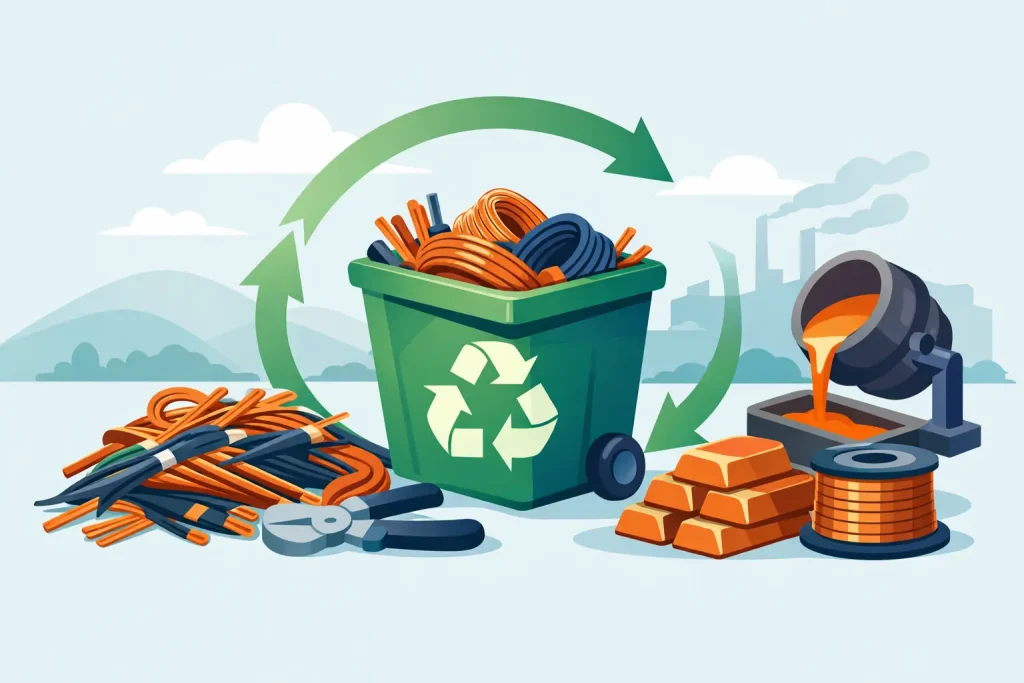
Copper wiring has value even when it looks like a messy pile in the shed, workshop or skip bin. If you’re wondering how to recycle copper wiring without wasting time or money, the main thing is to keep it clean, keep it separate, and deal with a recycler who makes collection and pricing straightforward.
For homeowners, that might mean old household cabling left over from a renovation. For sparkies, plumbers, builders and demo crews, it usually means regular offcuts, stripped wire, mixed cable and job-site scrap building up faster than anyone wants to deal with. Either way, copper should not end up in the rubbish. It can be recovered, reused and turned back into valuable material with far less environmental impact than mining new metal.
How to recycle copper wiring without the usual hassle
The easiest way to recycle copper wiring starts before collection day. The better your copper is sorted, the easier it is to price, load and process. That matters because copper wiring is not all treated the same. Clean bright copper generally attracts stronger rates than insulated wire, and mixed loads can slow everything down if they are bundled together with rubbish, steel, plastic or general demolition waste.
If you have a small amount at home, separate your copper wiring from other household waste and store it somewhere dry. If you run a trade business or workshop, it helps to use dedicated bins or tubs for different grades. That small bit of organisation can save real time later, especially when you want a quick quote or a pickup that does not interrupt the workday.
A good recycler will tell you what they accept, what needs to be separated and whether collection makes sense for your volume. That is often the difference between a job that feels easy and one that drags on for days.
What counts as recyclable copper wiring?
Most copper wiring can be recycled, but the value depends on the type and condition. Common examples include household electrical wire, power cable, data cable, appliance wiring, building site offcuts, switchboard cable and scrap removed during strip-outs or demolition work.
What matters most is contamination. Copper that is heavily mixed with dirt, plaster, insulation fragments, conduit, fittings or general site debris is still often recyclable, but it may take more handling and may not achieve the same return as cleaner material. If the load includes brass, aluminium or other metals, keep them separate where possible. Mixed metal loads can still be managed, but sorting improves efficiency and usually helps with pricing clarity.
Burning insulation off wire is not the answer. It is unsafe, environmentally harmful and can create compliance issues. Responsible recycling means processing the material properly, not trying to force a higher grade through unsafe shortcuts.
Stripped wire versus insulated wire
Stripped copper wire is exactly what it sounds like – copper with the insulation removed, leaving clean metal behind. This is usually easier to assess and often commands a better rate because there is less non-metal material to process.
Insulated copper wire still has value and is commonly recycled every day. Whether it is worth stripping depends on the quantity, the thickness of the cable and how much labour is involved. For a few kilos of thin household wire, stripping can take longer than it is worth. For heavier cable and larger volumes, the numbers can look different.
That is why there is no one-size-fits-all answer. If you are a tradie producing regular scrap, time is money. In many cases, it makes more sense to keep moving on the job and let the recycler handle the material as-is.
Sorting copper wiring for a better result
If you want the process to run smoothly, sort your materials into simple groups. Keep clean stripped copper separate from insulated wire. Keep copper separate from brass, aluminium and steel. Remove obvious rubbish like timber, plasterboard, packaging and loose plastic where you can.
You do not need to make it perfect. You just need to avoid turning valuable scrap into a mixed mess. Even basic sorting helps a recycler quote more accurately and collect more efficiently.
For commercial sites and trade yards, consistency matters. If your team always puts cable offcuts in one bin and mixed metals in another, collections become faster and easier to manage. That also reduces the risk of good copper getting lost in a general waste skip.
Should you strip copper wiring yourself?
Sometimes yes, sometimes no. If you have thick cable, the right tools and enough volume, stripping may improve the return. If you have fine wire, short lengths, or only a small amount, the labour can outweigh the benefit.
There is also the safety side. Cutting and stripping cable with the wrong tools can cause injury, especially if material has not been properly checked or isolated. If there is any doubt about whether wire is live, damaged or connected to old equipment, leave the removal to a qualified professional.
For many customers, the practical option is simple: sort it, store it, and arrange recycling without spending half a day trying to process every last piece.
Safety and compliance matter more than people think
Copper wiring often comes from renovation, construction and demolition work, which means it may be mixed with sharp edges, dust, old fixtures or damaged materials. Gloves, covered footwear and basic handling care go a long way.
There is also the legal and compliance side. Recyclers need to operate properly, and customers should be able to deal with a business that handles scrap responsibly. That is particularly important for commercial operators, body corporates, worksites and businesses that need a clear, reliable disposal pathway.
If your copper wiring comes from a larger strip-out, shutdown or commercial clean-up, collection is usually the safest and most efficient option. Loading loose cable into a ute, driving across Melbourne and waiting around at a yard is not always the best use of time, especially when the material is bulky or recurring.
The environmental benefit of recycling copper wiring
Copper can be recycled again and again without losing its core properties. That makes it one of the more useful materials in the recycling stream. Recovering copper from old wire reduces the need for raw extraction and cuts down the amount of metal heading to landfill.
For households, that means a cleaner way to get rid of renovation waste. For trades and businesses, it is a practical way to manage scrap responsibly while recovering value from material that would otherwise take up space.
The environmental side and the commercial side are not separate issues. Good recycling does both. It reduces waste and helps return useful metal to the supply chain.
When collection makes more sense than drop-off
If you only have a small box of cable, dropping it off may be manageable. But once the volume grows, collection quickly becomes the smarter option. Heavy cable, ongoing scrap generation, site access issues and busy work schedules all make pickup more practical.
That is especially true for electricians, builders, plumbers, demolition teams and small businesses that cannot afford to pull staff off productive work just to move scrap around. A local service that offers quick collection and fair pricing removes a lot of that friction.
Melbourne Copper Recycler works with both one-off and recurring customers across Melbourne, which suits everyone from households clearing out old cabling to trade operators with regular loads to move. The key benefit is simple – less handling for you, and a more direct path to responsible recycling.
Getting the best value from your copper wiring
If your goal is to get a fair return, focus on the basics. Keep copper separate, avoid contamination, do not burn insulation, and ask for clear guidance on the type of material you have. Honest pricing starts with honest presentation of the scrap.
It also helps to be realistic. Not every bundle of wire is high-grade copper, and not every load needs hours of sorting to be worthwhile. The best result usually comes from balancing effort against value. A clean, well-separated load is great. A fast pickup of unsorted but clearly identified scrap can also be the right choice when time matters more.
If you are dealing with copper wiring regularly, set up a simple system now rather than waiting until scrap piles up. One tub for stripped copper, one for insulated wire, one for brass and mixed metals. That small habit makes future collections faster, keeps your site tidier and helps ensure valuable material does not end up in the wrong bin.
Copper wiring is too valuable to treat like rubbish, and recycling it should not be hard. If you keep it separate and work with a recycler who is easy to deal with, the job becomes a lot simpler from the start.