
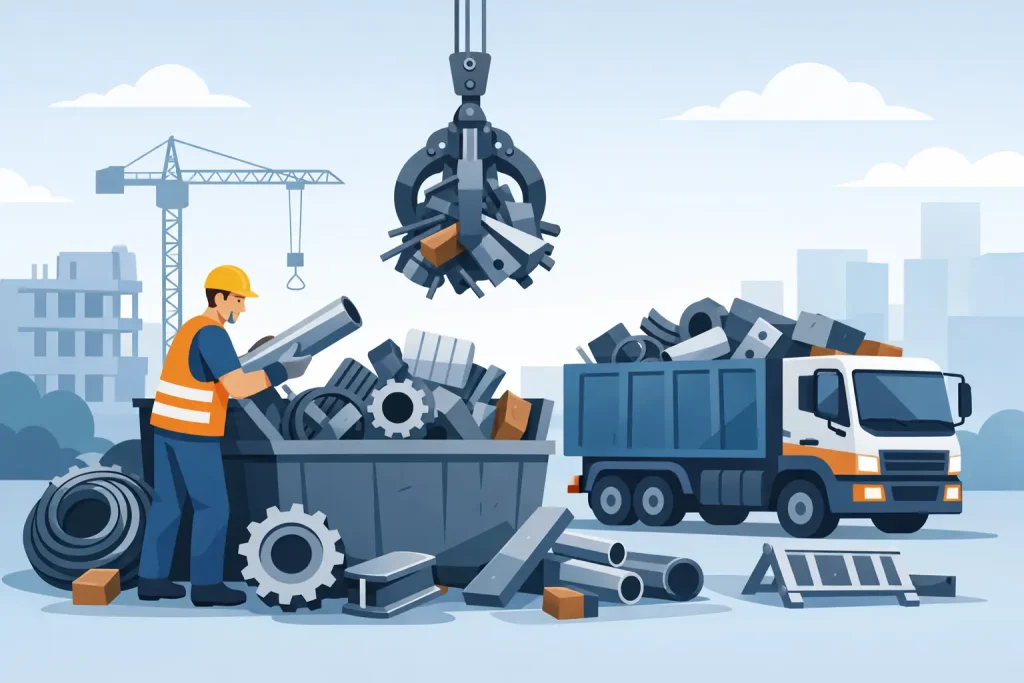
A pile of offcuts near the site shed does not look like a major problem – until it starts taking up space, slowing access, and turning into one more job nobody wants to deal with. That is where scrap metal collection for builders makes a real difference. It clears the site, keeps valuable material out of skip bins, and turns leftover metal into something useful instead of wasted overhead.
For builders across Melbourne, scrap tends to build up in small amounts at first. A few lengths of copper pipe, old wiring, brass fittings, metal framing offcuts, damaged sections from a fit-out, or demolition material from a strip-out. Then the pile grows. Before long, you have money sitting on site and a disposal issue that is getting in the way of the work.
Why scrap metal collection for builders matters on active sites
On a busy build, space matters. Every square metre taken up by scrap is space you cannot use for materials, access, storage, or safer movement around the job. Loose metal can also create avoidable hazards, especially when it is mixed with general waste, packaging, and broken materials.
There is also the cost issue. When metal goes into mixed rubbish, builders pay twice. First, they lose the recycling value of copper, brass, and other recoverable metals. Second, they often pay to remove material that could have been collected separately. On some jobs, that may only be a minor loss. On larger commercial or multi-stage projects, it adds up quickly.
The practical benefit is simple. A reliable collection service helps keep the site cleaner, reduces unnecessary handling, and removes one more task from the team. Instead of asking labourers or trades to load scrap into a ute and drive it across town, collection brings the solution to the site.
What builders usually generate
Not every job produces the same type or volume of scrap. A new residential build will look different from a commercial refurbishment or a demolition-heavy project. That said, builders often end up with a mix of high-value and lower-value metals that are still worth separating.
Copper is one of the main ones. It often comes from electrical cable, plumbing pipe, roofing offcuts, hot water service components, and demolition material. Brass is also common in valves, tapware, fittings, and older plumbing assemblies. Depending on the job, there may also be aluminium, steel, stainless steel, and mixed non-ferrous metals.
The key point is that builders do not need to become metal grading experts to benefit from recycling. A straightforward collection service should make the process easier, not more complicated. If material is obviously recyclable and kept reasonably separate from general rubbish, that is already a strong start.
New builds, renovations, and demolition all create different scrap patterns
On new builds, scrap usually comes through in cleaner streams. Offcuts, surplus lengths, and packaging-related metal are often easier to sort and collect. Renovations can produce more mixed material, especially when old services, fixtures, and hidden infrastructure are removed.
Demolition and strip-out work tend to create larger volumes, but the material can be more contaminated. Dust, concrete, insulation, or mixed waste can affect value and handling. That does not mean it should be ignored. It simply means timing and site separation matter more.
The biggest mistakes builders make with scrap
The most common mistake is treating all metal as rubbish. It sounds obvious, but it still happens on plenty of sites, especially when the focus is speed and the crew wants to keep moving. Throwing everything into one skip may look efficient in the moment, but it usually costs more in the end.
The second mistake is leaving collection too late. Scrap that sits around for weeks tends to get mixed, damaged, or buried under other waste. It also becomes harder to estimate and sort. Regular pickups usually work better than waiting for a single clean-up at the end of the job.
Another issue is relying on staff to manage disposal in their own time. That approach can lead to inconsistent handling, poor site presentation, and lost material value. Builders are better served by using a licenced, insured recycler that can collect directly and keep the process compliant and straightforward.
How to make scrap metal collection easy on site
The easiest system is usually the best one. Set aside a clear area for scrap metal early in the project and let trades know what belongs there. Copper, brass, cable, and other metals should stay out of general waste wherever possible. Even basic separation helps with faster pickup and better returns.
For larger jobs, collection timing matters just as much as sorting. If the site is producing metal every week, regular pickups can prevent stockpiles from becoming a nuisance. On shorter jobs, one or two scheduled collections may be enough. It depends on volume, site access, and whether the material is coming from fit-out, services, or demolition.
Good communication also saves time. If a recycler knows what type of metal is on site, how much there is, and whether access is tight, the pickup can be planned properly. That means less back-and-forth on the day and fewer disruptions to your crew.
What a builder should expect from a collection service
A proper service should be quick to book, clear about what it can collect, and realistic about timing. Builders do not need vague promises. They need a collector who turns up, loads efficiently, and helps keep the site moving.
Fair pricing matters too, particularly for copper and brass where value can be significant. But price is only one part of the equation. Fast pickup, reliable communication, and responsible recycling are often just as important when you are trying to keep a project on schedule.
Why collection beats self-delivery for many builders
Some builders prefer to drop material off themselves, especially if the yard is on the way to another job. That can work when volumes are small and transport is easy. But for many sites, self-delivery means pulling a worker off task, loading vehicles, dealing with traffic, and losing time that could be spent on the build.
Collection removes that friction. It is especially useful for bulky loads, repeat volumes, or jobs where access and timing need to be managed carefully. A builder can keep the team focused on productive work while the scrap is handled by a recycler set up for the job.
This is where a local operator makes a difference. Melbourne sites are rarely simple when it comes to access, schedules, and turnaround times. A recycler that understands local conditions, service areas, and trade expectations can usually make the process more efficient.
Environmental responsibility is not just a nice extra
Builders are under more pressure than ever to reduce waste and show better material handling. Clients notice it. Project managers notice it. So do developers and commercial partners. Responsible recycling is now part of running a professional site, not just a side benefit.
Metal recycling reduces the need for virgin resource extraction and keeps recoverable material in use. For builders, the immediate benefit is practical – less waste to landfill and cleaner removal of usable materials. The longer-term benefit is reputational. A site that handles waste properly reflects well on everyone involved.
That is one reason many Melbourne builders choose collection over ad hoc disposal. It is easier to show that recoverable metal was handled properly when it goes through a licenced and insured recycler. Melbourne Copper Recycler supports that approach by keeping the process simple, local, and service-focused.
Choosing the right scrap metal collection partner
Builders do not need flashy promises. They need reliability. A good recycler should offer prompt collection, fair market-based pricing, clear communication, and the ability to work around site conditions without creating extra admin.
It also helps if the service is flexible. Some builders need one-off pickups after a demolition stage. Others need recurring collection across multiple jobs. The right provider should be able to handle both without making the process harder than it needs to be.
When comparing options, look beyond price alone. Ask whether collection is available, whether the business is licenced and insured, how quickly they can respond, and whether they regularly work with trade and construction clients. Those details often tell you more than a headline rate.
A clean site runs better, and scrap should not be the reason a job gets slowed down. If metal is piling up, the easiest fix is usually the best one – get it collected, get fair value for it, and keep the build moving.