
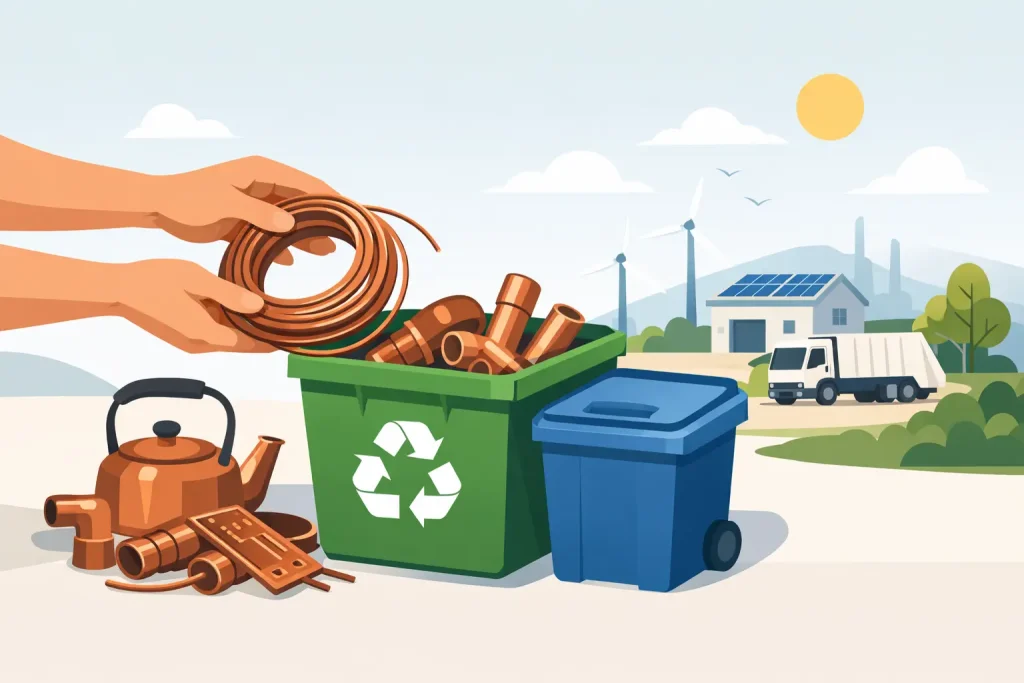
A coil of old wire in the shed, a broken hot water unit out the back, leftover plumbing offcuts from a weekend job – this is how household copper disposal usually starts. Most people know copper has value, but they are not always sure what belongs in recycling, what needs separating, or whether it is worth arranging a pickup at all.
The good news is that copper is one of the more straightforward metals to recycle when you deal with it the right way. For Melbourne households, the main goal is simple: keep copper out of landfill, keep your property clear, and make sure the material goes to a recycler that can recover it properly.
Why household copper disposal matters
Copper is too valuable to throw in the rubbish. It can be recycled again and again without losing its quality, which makes it one of the more useful materials in the recycling stream. When copper ends up in landfill, that value is lost and more raw resources need to be extracted to replace it.
For households, there is also a practical side. Scrap copper piles up faster than people expect. Renovations, appliance replacements, electrical work and plumbing repairs can leave behind cable, pipe, fittings and mixed metal items that sit around for months. They take up space, create clutter and, in some cases, become a safety issue.
Proper disposal is also about compliance and common sense. Some metal items can be awkward to move, and some contain mixed materials that should not be dumped or handled carelessly. A licensed recycler helps remove that uncertainty.
What counts as household copper
Household copper disposal is not limited to bright, clean pipe or stripped wire. Copper turns up in more places than many homeowners realise. Common examples include old plumbing pipe, copper tubing, roofing offcuts, electrical cable, hot water system parts, air conditioning components and certain appliance internals.
You may also have copper mixed with brass or other metals. Taps, valves and fittings often contain brass rather than pure copper. That is not a problem, but it does affect how the material is sorted and priced. If you are not sure what you have, do not guess too hard – an experienced recycler can usually identify it quickly.
The condition of the metal matters as well. Clean copper, such as pipe without fittings or stripped cable, is usually more straightforward to process than insulated wire or heavily mixed scrap. That does not mean mixed material is not worth recycling. It simply means the value and handling can vary.
What should not go in general rubbish
As a rule, copper and copper-bearing items should not be treated like ordinary household waste. If an item contains recoverable metal, it is usually better off going through a scrap recycler than into a council bin. That includes loose pipe, cable, sheet copper and parts removed during renovations.
The main grey area is mixed goods. An old appliance, for example, may contain copper but also include steel, plastic, insulation or fluids. Some units need basic preparation before collection or drop-off. Others are accepted as mixed scrap and sorted later. It depends on the item, its size and whether hazardous components are involved.
If something has been burnt, contaminated, or heavily corroded, it may need special assessment. Burning insulation off wire is not the answer. It creates pollution, can breach regulations and often reduces trust in the material being offered. Clean, honest sorting is always the better option.
How to make household copper disposal easier
The easiest way to handle copper at home is to separate it as you go. If you are doing a renovation, replacing old plumbing or clearing out a garage, keep copper and brass aside from general rubbish and green waste. A dedicated tub, crate or corner of the shed is usually enough for small volumes.
You do not need to over-process everything. There is no point spending hours trying to strip every last bit of wire if the volume is small and your time is better spent elsewhere. For some households, separating obvious copper from non-metal waste is enough. For others, especially if there is a decent amount of cable or clean pipe, a bit of sorting can improve value.
Try to keep the material dry and accessible. Wet, muddy or buried scrap takes longer to inspect and load. If a collection is being arranged, placing the metal near the driveway or another clear access point helps speed things up.
A simple way to sort copper at home
For most households, three categories are enough: clean copper, insulated cable, and mixed metal items. Clean copper includes pipe, tubing and sheet with minimal attachments. Insulated cable covers household wiring and leads that still have plastic coating. Mixed metal items include taps, valves, appliance parts and anything with more than one material attached.
That level of sorting gives a recycler a clear starting point without asking you to become a scrap expert.
When a pickup makes more sense than doing it yourself
For a few kilos of copper, some people are happy to load the car and take it in themselves. But household copper disposal often becomes less convenient once the pile gets larger, heavier or messier than expected. Hot water units, bundled cable, old air con parts and renovation scrap are not always easy to shift safely.
That is where collection becomes the practical option. A pickup saves time, avoids the hassle of lifting awkward material into your vehicle, and removes the problem in one go. For busy households and tradies working from home, it also means less disruption.
There is another advantage: you can get clarity before anything moves. A quick quote and a direct booking process are often all that is needed to decide whether the scrap is worth collecting now or whether it makes sense to add to it first.
Household jobs that often produce copper scrap
The most common jobs are bathroom and kitchen renovations, electrical rewiring, hot water system replacement, air conditioner removal and general garage clean-outs. These jobs rarely produce just one neat type of metal. More often, they leave a mix of copper, brass, wire and old fixtures. A recycler used to household material can deal with that without turning it into a complicated exercise.
Getting fair value without overthinking it
People often ask the same question first: how much is my copper worth? The honest answer is that it depends on the type, cleanliness, volume and current scrap market. Clean bright copper will usually be treated differently from mixed copper or insulated cable, and brass fittings are priced differently again.
What matters most is dealing with a recycler that is upfront about grading and straightforward about collection. Fair value is not only about the highest number quoted over the phone. It is also about reliability, proper weighing, clear communication and service that saves you time.
For some households, convenience is the bigger win than chasing every last dollar. If scrap has been sitting untouched for six months, getting it removed quickly and responsibly is often the better result.
Choosing a recycler for household copper disposal
Not every disposal option is equal. For household copper disposal, you want a recycler that is licensed, insured and easy to deal with. Collection matters, especially in metro areas where transport, parking and loading can become a hassle fast.
It also helps to choose a local operator that understands Melbourne households, local access issues and the difference between a one-off clean-up and a recurring trade pickup. If you have a mix of copper and brass, or you are unsure whether certain items are accepted, a quick phone conversation should give you a straight answer.
Melbourne Copper Recycler works with households as well as trades and businesses, which means mixed residential scrap is nothing unusual. That local, practical approach matters when you want fast collection without a lot of back and forth.
The environmental side is real, not just marketing
People sometimes hear the word sustainability and expect a sales line. With copper recycling, the benefit is genuine. Recovering copper from existing material reduces the need for new mining, lowers waste and keeps usable metal in circulation.
At a household level, the impact is modest but still worthwhile. One cleared-out garage or one renovation skip will not change the world on its own. But across Melbourne, responsible recycling of copper, brass and other metals adds up. It keeps valuable material out of landfill and supports a more efficient use of resources.
That is why the best approach is usually the simplest one: do not let scrap sit around, do not throw copper in the rubbish, and do not make disposal harder than it needs to be. If you have household copper to move on, sort what you can, ask the question, and get it collected properly.