
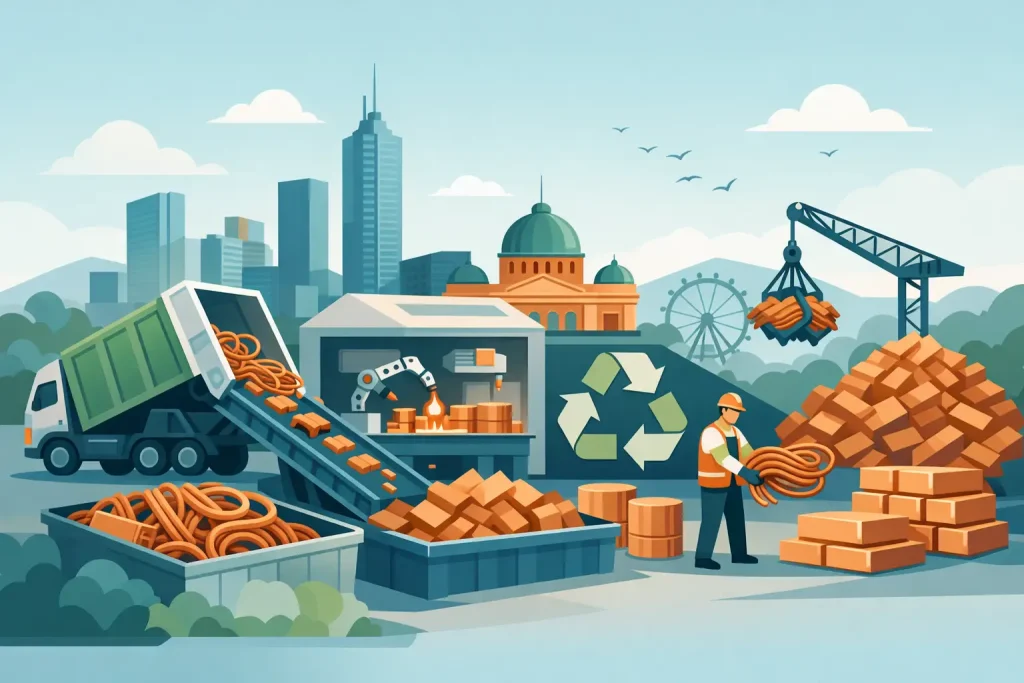
A pile of old cable offcuts, stripped pipe, worn fittings or demolition scrap might not look like much on site. But if you have ever wondered how is copper recycled, the short answer is that it is collected, sorted, cleaned, processed and turned back into usable metal without losing much of its quality. That is why copper remains one of the most valuable and practical metals to recycle across Melbourne.
For homeowners, tradies and businesses, the process matters for a simple reason. The better copper is handled from the start, the easier it is to recycle properly, and the better the return is likely to be. Good recycling is not just about keeping metal out of landfill. It is also about recovering a material that can go straight back into manufacturing, electrical products, plumbing, construction and transport.
How is copper recycled step by step?
Copper recycling starts with collection. That material can come from household renovations, electrical work, plumbing jobs, commercial strip-outs, factory clean-ups or demolition sites. Some loads are neat and separated already, while others arrive mixed with brass, steel, plastic insulation or general scrap.
Once the copper is collected, it is sorted by grade and type. This stage is more important than many people realise. Clean bright copper wire is not treated the same way as painted copper, burnt wire, mixed cable or old pipe with solder and fittings attached. The more contamination in the load, the more work is required before the copper can move further through the recycling stream.
After sorting, the copper is cleaned and prepared. Depending on the material, that may involve stripping insulation from wire, removing non-metal attachments, separating different metals, or cutting larger pieces into more manageable sizes. For some loads, basic preparation is enough. For others, especially mixed commercial scrap, mechanical processing may be needed to separate copper from plastics or other metals.
The next step is processing. Copper scrap is commonly shredded, granulated or compacted before it is melted down. Melting removes the metal from its old form so it can be recast into new products such as rods, sheets, tubes or wire. Because copper can be recycled repeatedly with very little loss in performance, recycled copper is widely used in manufacturing.
What happens after that depends on the grade and destination. Some copper goes straight to refiners or manufacturers. Some is blended with other recovered material before being made into new products. Either way, the point is the same – the copper is recovered as a useful resource rather than wasted.
Why copper is worth recycling
Copper is valuable because it conducts electricity well, resists corrosion and performs reliably over a long service life. Those same qualities make it worth recovering at the end of that life. Unlike many materials, copper does not become useless after one use. It can be reprocessed and used again in new electrical systems, plumbing products, appliances and building materials.
That is one of the main reasons copper recycling plays such a practical role in waste reduction. Recovering existing copper reduces the need for newly mined raw material, lowers energy use compared with primary production and keeps heavy recyclable metal out of landfill. For businesses trying to manage waste responsibly, that is not just good for the environment. It also makes operational sense.
There is also the financial side. Copper usually commands a stronger scrap value than many other metals, especially when it is clean and well sorted. For tradies and commercial operators generating regular offcuts or removed materials, that can add up quickly. Even for households, old wiring, pipe and fittings from a renovation can be worth more than expected when recycled properly.
Not all copper scrap is the same
One of the biggest factors in copper recycling is grade. People often assume copper is just copper, but pricing and processing can vary a fair bit depending on condition, purity and how much work is needed to recover the metal.
Clean bright copper is typically among the most sought after because it is uncoated, unalloyed and free from contamination. Copper pipe can also hold good value, though fittings, solder, paint or internal build-up may affect its grade. Insulated cable is different again because the copper has to be separated from the plastic covering. Burnt copper may look stripped, but burning can reduce value and create compliance issues, so it is not treated the same as clean stripped wire.
Mixed loads are common on worksites. You might have copper sitting with brass taps, stainless fixings, aluminium offcuts or general demolition scrap. That does not make the material unrecyclable, but it does affect how efficiently it can be sorted and priced. If a load is separated before collection, the process is usually quicker and clearer.
How is copper recycled when it comes from cable and wiring?
Cable recycling is one of the most common examples people ask about. Old house wiring, electrical offcuts, data cable and industrial cable all contain recoverable copper, but the way they are recycled depends on how the material is presented.
If the wire is already stripped and clean, it can be sorted by grade and moved on with minimal extra work. If it is insulated, the copper has to be separated from the outer plastic or rubber layer. That is often done with specialised machinery that chops the cable into smaller pieces and then separates the materials mechanically.
The reason this matters is simple. Copper is valuable, but contaminated loads take more time and equipment to process. That is why stripped copper generally attracts stronger rates than mixed cable. For many customers, though, convenience matters just as much as price. If cable is piling up in the shed, workshop or site bin, getting it collected and recycled properly is often the easiest way to clear space and recover value at the same time.
What affects the recycling process and payout?
The recycling process is fairly straightforward in principle, but several things can change how a load is assessed. Purity is a major one. Cleaner copper is easier to recycle, which usually means better value. Volume also matters. A larger quantity can make collection and processing more efficient, especially for regular commercial loads.
Then there is accessibility. Loose material stacked safely and ready for pickup is easier to handle than copper buried under mixed rubbish, rubble or wet site waste. Time matters too. Commodity prices move, so scrap values can change with the market.
This is where dealing with a reliable local recycler makes a difference. A service that offers quick collection, clear communication and fair assessment saves customers from running around, loading a ute or guessing what their scrap is worth. For many Melbourne customers, that convenience is the deciding factor.
Why proper recycling matters more than throwing copper in a skip
Copper should never be treated as ordinary rubbish. Once it ends up mixed through a general waste stream, the chance of recovering it properly drops. That means lost value for the customer and unnecessary waste for the environment.
On active sites, scrap copper often gets pushed aside because there are bigger jobs to deal with. That is understandable. But when it sits too long, it can create clutter, take up useful space and become harder to sort later. Regular collection keeps things cleaner and makes recycling part of the normal workflow rather than a job that gets delayed for months.
There is also the compliance side for some commercial operators. Responsible metal recycling supports cleaner waste handling practices and gives businesses a more practical way to manage recoverable materials. It is not about making the process complicated. It is about doing the obvious thing properly.
A practical option for Melbourne homes and worksites
For most people, the real question is not only how is copper recycled, but how easy is it to get the copper off the property in the first place. That is where service matters. Fast pickup, straightforward quoting and clear communication remove the hassle, especially when customers do not have the time or vehicle space to transport scrap themselves.
Melbourne Copper Recycler works with homeowners, tradies and businesses that want a simple way to clear copper scrap, recover value and know the material is being handled responsibly. Whether it is a small amount of old pipe from a bathroom renovation or recurring cable and fittings from commercial work, the best recycling outcomes usually start with getting the material collected before it becomes another pile to deal with later.
If you have copper sitting around, the smartest move is usually the simplest one – keep it separate, keep it accessible and get it into the recycling stream while it is still worth your time.