
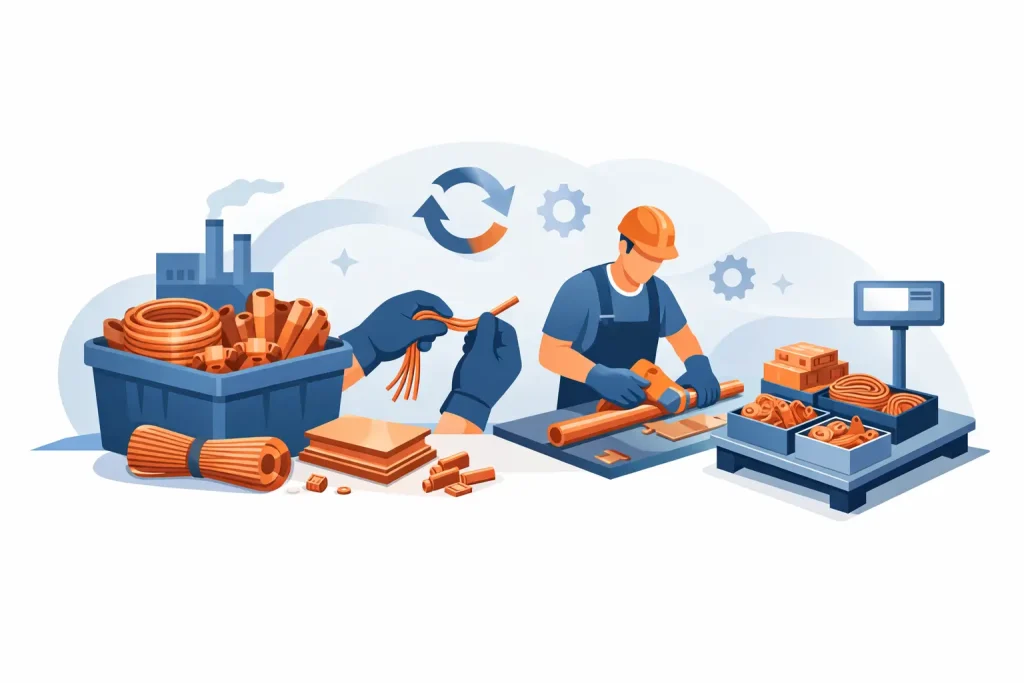
A tangled pile of old cable, plumbing offcuts and worn fittings can look like one job too many at the end of a long day. But if you know how to prepare scrap copper properly, the process is quicker, cleaner and usually worth more. For homeowners, tradies and businesses across Melbourne, a bit of prep can make collection easier and help you get fair value without wasting time.
The good news is you do not need to overcomplicate it. Most copper scrap can be prepared with a few simple checks, basic sorting and safe handling. The aim is not perfection. The aim is to keep your copper clean, separate obvious grades where practical, and make it easy for a recycler to assess.
Why preparation matters
Copper is valuable because it can be recovered and reused, but not all scrap copper is priced the same way. Clean, uncoated material is generally more desirable than mixed loads full of insulation, steel attachments, dirt or rubbish. When your copper is easier to inspect and process, it usually means a faster quote, a smoother pickup and fewer surprises.
Preparation also matters on the practical side. A tidy pile takes up less space in the shed, workshop, site container or factory corner. It is safer to handle, easier to count or weigh, and less likely to get mixed in with general waste. If you have regular scrap from electrical, plumbing, demolition or manufacturing work, getting into a routine saves time every week.
How to prepare scrap copper before collection
Start by separating copper from everything else. If you have brass, aluminium, stainless steel or general mixed metal in the same pile, split it out first. A recycler can handle different metals, but mixed loads slow down assessment and can affect pricing if valuable material is buried under lower-value scrap.
After that, look at condition. Clean copper pipe, bright wire and dry offcuts are straightforward. Copper that is painted, soldered, burnt, heavily oxidised or attached to other materials may still be recyclable, but it is not the same product. If you are unsure what belongs together, keep similar items in separate tubs, bags or bins rather than throwing everything into one heap.
You do not need to scrub every piece until it shines. Just remove obvious non-copper material where it is quick and safe to do so. Plastic, timber, rubber, tape and large fittings are the usual culprits. If removing them takes excessive labour or special tools, it may be better to leave the item as is and let the recycler assess it honestly.
Sort by type where you can
The easiest way to prepare copper is to group it by what it is. Bare bright wire should stay with bare bright wire. Copper pipe can go together. Household cable, data cable and extension leads should be kept separate from clean wire if the insulation is still on. Copper cylinders, sheet, clippings and roofing offcuts can form their own pile if you have enough volume.
This does not need to become a half-day admin job. For many customers, two or three simple categories are enough – clean copper, insulated copper wire and mixed copper items. That alone gives a recycler a much clearer picture than one oversized bin filled with everything from cable to taps.
Remove obvious contamination
Contamination lowers efficiency and can lower value. That includes dirt, concrete, plaster, insulation foam, nails, screws, brackets and any general rubbish that found its way into the pile. On building and demolition sites, this is where loads often become messy. A few minutes pulling out obvious non-metal waste can make a real difference.
Be realistic, though. A short length of pipe with a fitting attached is one thing. Spending an hour cutting apart a complex assembly for a tiny gain is another. If the material is bulky or difficult to strip, set it aside and ask for advice when booking collection.
Stripping copper wire – when it is worth it
This is the question tradies ask all the time. Should you strip copper wire or leave the insulation on? The answer depends on the volume, the wire thickness and the time it takes.
Thick single-core cable or heavy electrical wire can be worth stripping if you can do it safely and quickly with the right tools. Thin household wire, mixed cable and low-volume offcuts are often not worth the labour. If you are spending too much time with a blade or makeshift tool, the value gained can disappear fast.
Never burn insulation off copper wire. It is unsafe, environmentally harmful and not an acceptable way to prepare material. Burnt copper can also be viewed differently because it creates contamination and compliance issues. Clean handling is always the better path.
For commercial operators with recurring cable volumes, a simple internal process helps. Keep stripped and unstripped wire separate from the start. That avoids re-sorting later and makes collection day far more efficient.
Preparing copper pipe, fittings and plumbing scrap
Copper pipe is one of the more straightforward scrap categories, especially for plumbers, renovators and demolition crews. If possible, shake out water, keep lengths reasonably bundled and remove obvious brass taps, steel brackets or plastic connectors. Dry, clean pipe is easier to handle and assess than a wet pile mixed with old hardware.
Soldered joints are common and not usually a problem, but pipe loaded with insulation wrap, lagging or attached debris should be cleaned up where practical. Again, practical is the key word. A few fast removals are worthwhile. A labour-heavy strip-down job may not be.
If you have brass mixed through the load, separate it if you can. Brass has value too, but mixing it through copper is not the clearest way to present the material.
Safe handling matters as much as value
If you are working out how to prepare scrap copper on a busy site or at home, safety comes first. Copper can have sharp edges, jagged cut ends and hidden fixings. Wear gloves, use proper cutters where needed, and stack material so it will not topple over in the shed, trailer or skip area.
Electrical scrap needs extra care. Make sure cables are not live and equipment has been isolated before removal. Motors, switchboards and older units may contain more than just copper, and they should not be dismantled casually without knowing what you are handling.
For larger quantities, avoid constant rehandling. Put sorted material straight into designated tubs, cages, drums or pallets. Every extra movement adds time and increases the chance of injury.
Common mistakes that reduce the value of scrap copper
The biggest mistake is mixing copper with general rubbish. Once food waste, timber, plaster, cardboard and broken site debris end up in the same load, the whole job becomes slower and harder to assess. That creates friction for everyone.
The second is overprocessing low-value material. Not every piece needs to be stripped, cut or cleaned back to bare metal. Sometimes simple sorting does more for your return than extra labour.
The third is poor storage. Leaving copper out in weather, mud or standing water makes the load harder to manage. Covered storage is better, especially if you generate scrap regularly. It keeps your yard cleaner and your metal more presentable.
When to do the prep yourself and when to leave it
There is a point where preparation stops being useful and starts costing you time. If you have a few household items, basic sorting is enough. If you are a tradie with recurring offcuts, setting up separate bins for pipe, cable and mixed metal makes sense. If you are managing a larger commercial cleanout or demolition load, it may be better to focus on access, safe stockpiling and volume rather than fine-detail sorting.
That is where a service-driven recycler can make things simpler. A quick phone call can tell you what to separate, what to leave together and how to stage the load for pickup. For many Melbourne customers, that is the difference between a job that drags on and one that gets cleared properly.
Melbourne Copper Recycler works with both small and large loads, so the best approach is usually the practical one – sort what is easy, remove obvious contamination, and make collection straightforward.
A better way to get your copper ready
You do not need a perfect system to prepare copper well. You just need a sensible one. Keep copper separate from rubbish, split out obvious grades where practical, avoid unsafe shortcuts, and do not waste hours chasing minor improvements that add little value.
If your copper scrap is building up in the garage, workshop, job site or yard, getting it ready now means less clutter, easier recycling and a clearer path to a fair return. A clean pile and a simple plan go a long way.