
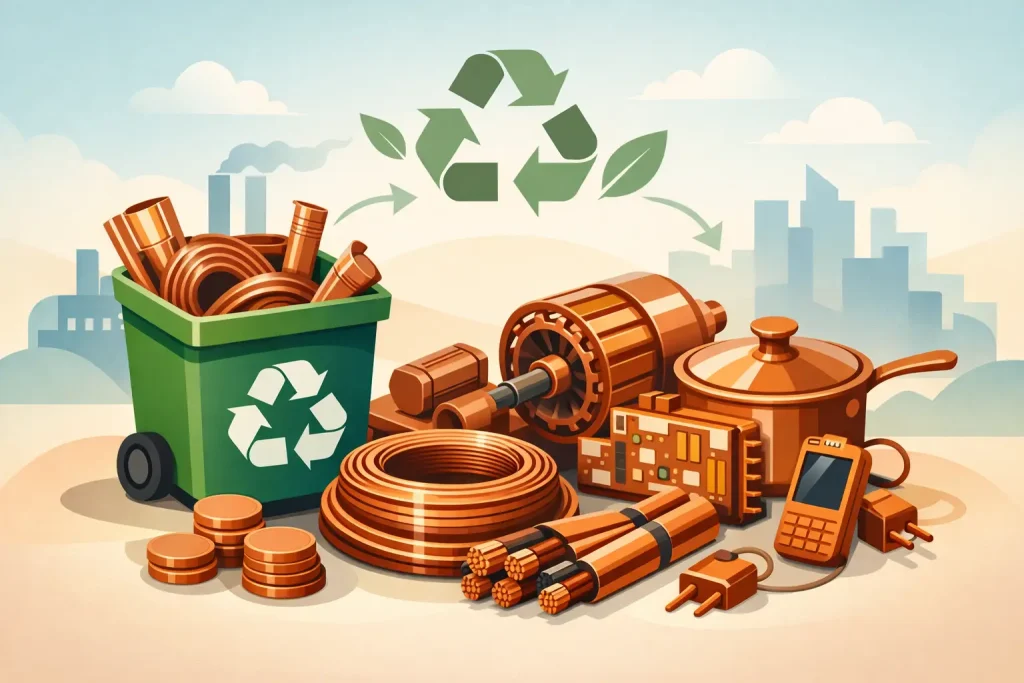
If you have a pile of old cable in the shed, a hot water unit out the back, or plumbing offcuts building up on site, knowing the best copper items to recycle can make a real difference to what you get back and how quickly you clear the mess. Some copper scrap is worth more because it is cleaner, thicker or easier to process, while other items still have value but need more sorting before they are ready for collection.
For homeowners, tradies and businesses across Melbourne, the job is not just about finding copper. It is about spotting the material that is actually worth separating from general scrap, storing it safely, and moving it on without wasting half a day. That is where a straightforward approach pays off.
What makes copper worth recycling?
Copper holds its value because it can be recycled again and again without losing performance. That matters in construction, plumbing, electrical work and manufacturing, where copper remains in high demand.
But not all copper scrap is treated the same. Clean, uncoated and uncontaminated copper usually attracts stronger prices than mixed loads with plastic, solder, steel fittings or heavy corrosion. The more effort required to process the material, the more that can affect the return.
That is why it helps to know which items are worth setting aside separately instead of tossing them in with mixed metal.
Best copper items to recycle for strong value
1. Bare bright copper wire
Bare bright copper is usually one of the most sought-after forms of scrap copper. This is clean, unalloyed, uncoated copper wire with no insulation, paint or fittings attached. Electricians often come across it during rewiring, switchboard upgrades and strip-outs.
If you generate this type of scrap regularly, keep it separate from insulated cable and mixed metal. Even small amounts can add up quickly. The key is cleanliness. Once the wire is burnt, painted or heavily oxidised, it may no longer be graded the same way.
2. Insulated copper cable
Insulated cable is one of the most common copper items people hold onto without realising its scrap value. It turns up in home renovations, office fit-outs, factory clean-outs and demolition work.
The copper inside still has value, but pricing depends on the copper recovery rate and the type of insulation. Thick industrial cable and heavier power cable can be more worthwhile than thin household lead wire. In many cases, it is better not to strip the cable unless you know it will improve the result. Stripping takes time, and if the volume is small, the labour may not stack up.
3. Copper plumbing pipe
Old copper pipe from bathrooms, kitchens, laundries and commercial plumbing jobs is another strong recycling item. Plumbers and demolition crews often generate steady quantities through upgrades and removals.
Clean copper pipe without brass taps, solder-heavy joints or plastic attachments is easier to process and generally more desirable. If possible, separate long pipe runs from mixed plumbing scrap. It keeps things cleaner and can help speed up the quoting process.
4. Hot water units and cylinders
Hot water services can contain valuable copper components, particularly older systems with copper cylinders and pipework. These are bulkier than loose wire or pipe, but they can still be worth recycling rather than sending them to landfill.
The catch is that these units are mixed-material items. They may include steel, insulation, brass and other components. That does not make them a bad recycling item. It just means the value depends on how the unit is built and whether key metals are separated.
5. Air conditioning units and refrigeration scrap
Air con systems, condensers and refrigeration units often contain copper tubing and coils. Builders, HVAC contractors and property managers regularly deal with these during replacements and site upgrades.
These items can be worthwhile, but they are not as simple as loose copper. They usually contain aluminium, steel and other parts, and some units require proper handling before they are ready for scrap. If you have several old units taking up room in a workshop or yard, they are often worth collecting together rather than dealing with one at a time.
6. Electric motors
Electric motors are not pure copper, but many contain copper windings inside. That makes them a good recycling item, especially for workshops, maintenance teams, factories and tradies clearing old equipment.
Motor value depends on size, weight and copper content. Smaller domestic motors may not be worth dismantling by hand, while larger commercial or industrial motors can be more attractive as part of a bulk load. If the goal is speed and convenience, many businesses simply keep motors aside and have them collected with other scrap.
7. Copper roofing and flashing
Copper sheeting, flashing and roof offcuts are less common than wire or pipe, but they can be very good scrap if they are clean. Builders and roofers may come across them on older properties, heritage jobs or specialty installations.
Because this material is often broad, solid and relatively clean, it can be easier to identify and sort. Just keep an eye on contamination from sealants, fixings and mixed debris.
8. Appliances with copper inside
Old washing machines, dryers, microwaves, dishwashers and similar appliances can contain copper wiring and small motors. For a homeowner, these are often the easiest copper-bearing items to recycle because they are already sitting around unused.
That said, these are mixed scrap items rather than high-grade copper. They still belong in the recycling stream, but expectations should be realistic. The value is usually based on the full unit and its recoverable metals, not just the copper alone.
9. Brass taps, valves and fittings
Strictly speaking, brass is not copper, but it is closely related and often appears alongside copper plumbing scrap. Many jobs produce both at once, especially in plumbing, demolition and maintenance work.
Because brass contains copper, it can still carry good recycling value. If you are clearing out pipework, taps, valves and connectors, it makes sense to separate brass from steel and general waste. Mixed loads are harder to assess and often slower to process.
10. Copper offcuts from construction and fit-outs
Small offcuts from electrical, plumbing and building jobs are easy to overlook. Over a few weeks, though, they can become a decent pile of recyclable metal sitting in a bucket, bin or trailer.
These bits and pieces are often some of the best material to recycle simply because they are already loose, accessible and no longer needed. Instead of letting them build up around the site, set aside a clear bin for copper and brass only. That small step can make collection easier and help keep the work area safer and cleaner.
How to get better value from copper scrap
The simplest way to improve your return is to sort where you can. Keep bare bright wire separate from insulated cable, and keep clean copper pipe away from mixed metal and rubbish. You do not need to overcomplicate it, but basic separation helps.
It also pays to keep scrap dry and accessible. Wet, muddy or heavily contaminated loads can slow everything down. If you are running a busy site or workshop, even a basic system with labelled tubs or bins can save time later.
Volume matters too. A few kilos of copper is still worth recycling, but larger loads often make collection more practical, especially when you are dealing with bulky items like hot water units, motors or air con scrap. For regular generators of scrap, routine pickup can be the easiest option.
When it is worth separating items – and when it is not
There is a point where extra sorting stops being productive. If you are an electrician with clean cable offcuts every week, keeping grades separate makes sense. If you are a homeowner doing a once-off clean-up, spending hours stripping wire may not be worth it.
The same goes for dismantling appliances or old equipment. You can chase every last piece of copper, but labour, safety and time all count. Often, the better move is to collect similar items together and have them assessed properly.
That practical balance matters. Recycling should make life easier, not create another job that drags on.
Why copper recycling matters beyond the payout
The cash return is a big reason people recycle copper, but it is not the only one. Recycling copper reduces the need for new mining, keeps useful material out of landfill, and supports more efficient use of resources across construction, manufacturing and infrastructure.
For businesses, it also helps keep sites compliant, tidier and safer. For households, it is a simple way to get rid of bulky unwanted metal responsibly. And for trades, it turns everyday offcuts and tear-out material into something useful instead of wasted space in the ute or workshop.
If you are not sure what grade your scrap falls into, that is fine. The main thing is not letting good copper sit around mixed with rubbish, rusting in the weather or taking up room you need for the next job. A reliable local recycler like Melbourne Copper Recycler can help take that load off your hands with quick collection and a straightforward process, so the scrap is gone and the value is not left behind.
The best copper items to recycle are usually the ones you already have – clean wire, pipe, fittings, units and offcuts that are too valuable to throw away and too easy to ignore until they pile up.