
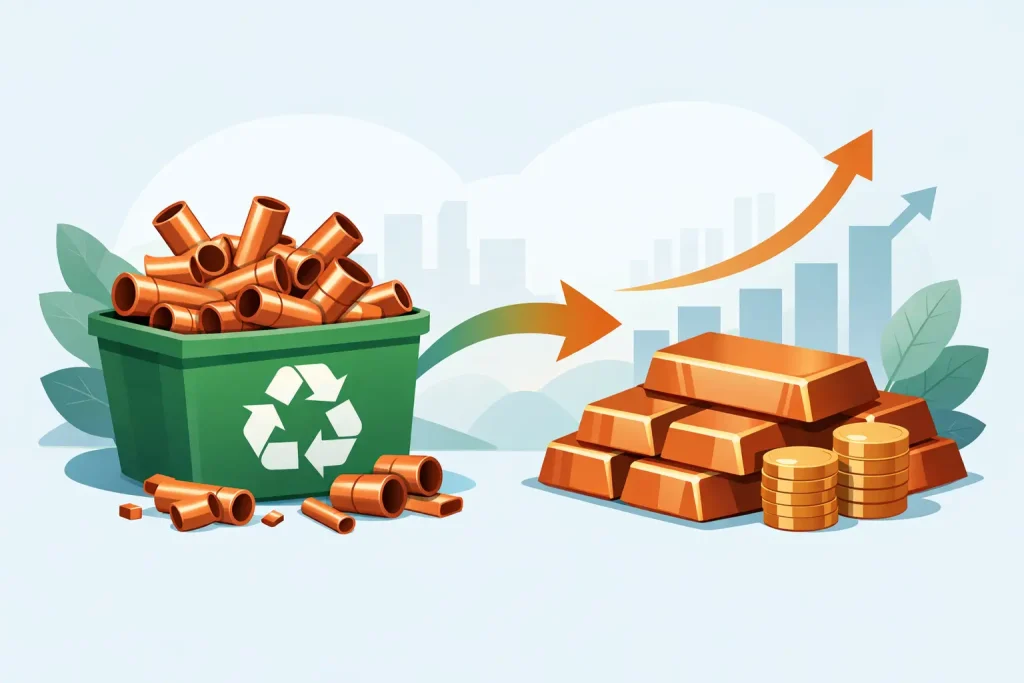
Copper pipe offcuts have a habit of piling up fast – under benches, in site bins, at the back of the ute, or in the corner of a workshop waiting for a “later” that never comes. Recycling copper pipes is one of the simplest ways to clear space, recover value, and keep useful metal out of landfill. For Melbourne homeowners, tradies, builders and businesses, the real win is not just the payout. It is getting the material gone quickly, properly, and without wasting half a day dealing with it.
Why recycling copper pipes makes sense
Copper is not a throwaway material. Even when a pipe is bent, cut, oxidised or removed from an old system, the metal itself still has value because it can be processed and reused. That matters for anyone doing a renovation, strip-out, plumbing upgrade, demolition job or regular trade work where scrap builds up week after week.
There is the financial side, of course. Copper generally attracts stronger scrap value than many other common site materials, especially when it is reasonably clean and separated. But there is also the practical side. Old pipework takes up room, creates clutter, and can become just another job sitting on the list. Moving it through a recycler turns a problem into something useful.
The environmental benefit is just as real. Recycling copper reduces the need to extract and process as much raw material, which means less energy use and less waste. For businesses that take sustainability seriously, and for households trying to dispose of materials responsibly, that is a solid reason not to send copper to rubbish.
What counts as copper pipe scrap
Most people think of straight plumbing pipe, but recyclable copper often shows up in a few different forms. It can be old plumbing lines from a bathroom renovation, air conditioning pipework, hot water service connections, roofing offcuts, or mixed demolition scrap. Some loads are clean and easy to identify. Others are mixed with fittings, solder, insulation, tape or attached brass components.
That mix matters because not all copper scrap is valued the same way. Clean, uncoated pipe with minimal attachments is usually more straightforward to process than material covered in paint, joined to other metals, or mixed with general site waste. That does not mean the mixed material has no value. It simply means grading can vary depending on what is in the load and how much handling is needed.
If you are not sure whether your pipework is suitable, that is usually not a reason to hold onto it. It is better to ask for a quote and get clear guidance than let it sit around for months.
How to get the best value when recycling copper pipes
A good return usually comes down to condition, volume and how the material is prepared. You do not need to overthink it, but a little effort can make the process smoother.
If you can, keep copper separate from steel, aluminium, plastic and general rubbish. A pile of copper pipes mixed with broken tiles, timber, packaging and other debris is slower to assess and process. Separation helps with pricing and collection.
It also helps to remove obvious non-metal attachments where practical. Rubber, plastic lagging, taps, brackets and large fittings can affect the grade. That said, there is a balance. If removing everything is going to waste valuable labour on a busy job, it may not be worth stripping every last piece. For a plumber or builder with ongoing scrap, speed on site often matters just as much as squeezing out a slightly better rate.
Volume can also change the equation. A few short lengths from a home renovation are handled differently from recurring loads from commercial works. Larger or regular quantities may justify collection and a more tailored pricing approach, especially when reliable pickup saves time and transport costs.
Recycling copper pipes on site without slowing down the job
For tradies and commercial operators, the biggest issue is not whether copper has value. It is whether dealing with it becomes another interruption. The best recycling setup is one that fits around the work, not one that creates more of it.
That usually means setting aside one clear area, tub or bin for copper only. When the crew knows exactly where offcuts and removed pipework go, the site stays cleaner and the scrap is easier to collect. It also reduces the chance of good metal ending up contaminated by general demolition waste.
For workshops and businesses, routine matters even more. Instead of waiting until the scrap becomes a problem, arrange regular removal once the volume reaches a sensible level. That keeps your yard, shed or warehouse safer and more organised while turning steady waste into steady recovery.
This is where a collection-based service makes practical sense. Rather than loading scrap yourself, arranging transport, and losing time on the road, you can have it picked up and processed properly. For many Melbourne operators, convenience is worth as much as the final price per kilo because time on the tools pays better than a trip to a yard.
Common mistakes that reduce returns
The most common mistake is simple – throwing copper into mixed rubbish. Once it is buried in plaster, timber, brick dust and general waste, it becomes harder to recover cleanly and easier to overlook.
Another one is holding material too long. Scrap copper sitting around can be forgotten, damaged further, or spread across multiple locations. A quick quote and collection can be the difference between getting paid now and letting value drift away.
Some people also assume every recycler offers the same service. They do not. Speed, reliability, collection options, communication and transparency all matter. A fair rate is important, but so is dealing with a licensed, insured operator who turns up when they say they will and handles material responsibly.
Overprocessing is another trap. Yes, cleaner copper can attract better pricing, but not every load needs hours of labour spent stripping and sorting. If you are a homeowner with a small amount of scrap, a basic tidy-up may be enough. If you are running a busy commercial job, your labour cost may outweigh the benefit of chasing perfect separation.
Why local collection matters in Melbourne
Melbourne jobs do not always leave much room for extra errands. Between traffic, site schedules and customer deadlines, transporting scrap yourself can become more trouble than it is worth. That is especially true for bulky pipework, recurring trade scrap, or loads spread across different sites.
A local recycler with Melbourne-wide coverage helps remove that friction. Quick quotes, direct booking and free collection can make the whole process far easier for households and businesses alike. Instead of wondering when you will get around to it, you can get the scrap moved and the space back.
That local factor also helps with trust. When you are dealing with a nearby operator who understands the needs of Melbourne homeowners, plumbers, electricians, builders and demolition teams, the service tends to be more practical. The focus is not on making the process complicated. It is on getting the job done properly and efficiently.
Recycling copper pipes as part of responsible disposal
There is a broader reason this matters. Construction and renovation create a lot of waste, and not all of it needs to end up in landfill. Copper is one of the clearer examples of a material that should stay in circulation. When it is recycled properly, it can be recovered and used again rather than discarded after one service life.
For businesses, that supports cleaner operations and better waste management. For households, it is a straightforward way to make a renovation or clean-out less wasteful. And for the wider community, responsible metal recycling supports more efficient use of resources.
At a practical level, responsible disposal also means using a recycler that handles material properly and operates with the right standards in place. That matters whether you have a few old pipes from a bathroom reno or regular copper scrap from ongoing trade work.
When to book a pickup
The right time is usually earlier than most people think. If copper pipes are taking up room, creating mess, or starting to mix with other waste, it is time. You do not need to wait for a huge load before getting a quote.
For homeowners, pickup makes sense when a renovation, clean-out or plumbing replacement leaves you with scrap you cannot easily transport. For tradies and businesses, it makes sense when the volume is recurring, when staff time is better spent elsewhere, or when site access and scheduling make self-drop-off inconvenient.
Melbourne Copper Recycler works with both small and larger volumes, so the process stays straightforward whether you are clearing out a shed or managing scrap from regular jobs. The main point is to keep the material moving while it still holds value and before it becomes just another pile in the way.
If you have copper pipes sitting around, the useful next step is simple: get them assessed, get them collected, and turn dead space into something worthwhile.